Film Review: The Night They Raided Minsky’s

Dear Constant Reader,

The other day one of my students asked for recommendations for movies about burlesque and I remembered this one…
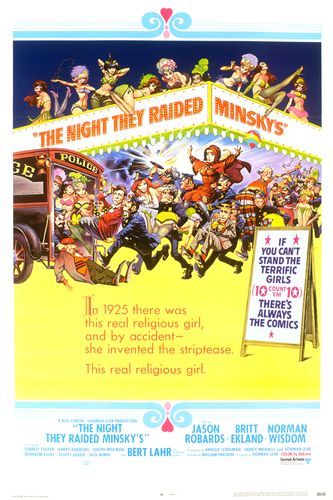
The Night They Raided Minsky’s, directed by William Friedkin, MGM, 1968.

Based on the book of the same name, this movie, set in 1925, tells the tale of Rachel Schpitendavel (Britt Ekland), an Amish girl who dreams of dancing on stage in New York. She arrives at the National Winter Garden, a burlesque house, run by Billy Minsky (Elliot Gould).

Minsky is beleaguered by Vance Fowler (Denholm Elliott) a zealous anti-vice crusader who wants to raid the theater. Straightman Raymond Paine (Jason Robards) and top Banana Chick Williams (Norman Wisdom) realize they can solve this problem by informing Fowler that Mademoiselle Fifi will be performing her dance that drove a million Frenchmen wild at the midnight show. Of course, the performer will actually be modest Rachel, doing her Biblical interpretive dance. The raid will be a bust and Fowler humiliated.

Meanwhile Minsky is courting gangster Trim Houlihan (Forrest Tucker) in hopes that he’ll invest in the theatre, but Houlihan thinks that investment gives him exclusive rights to Mlle. Fifi… But not if Raymond Paine seduces her first… And Rachel’s father is storming into the city from Pennsylvania. His daughter had better on the last train home or he will disown her.

Suffice it to say, almost every man in this movie wants Rachel for something.

It’s not spoiling anything (since they announce it at the start of the movie) to say that Rachel gets on stage, discovers the power she has over an audience, and invents the striptease.

The movie betrays its 1960s creation with the saturation of the colors and Britt Ekland’s bouffant hair. However, it does slip in some actual footage from the 20s, and the Lower East Side is dressed up pretty accurately. There’s a nice bit where they transition from the vintage footage to black and white film of a street scene and then take it to color.

The best reason to watch this movie is the burlesque show. Throughout the movie you see the show in progress. A chorus line of 10 terrific girls (but only 9 costumes) prance and shimmy on the stage in skimpy costumes. One of them looks like she’d rather be anywhere else and another just can’t dance. There are classic comedy sketches like “Meet me Round the Corner” and “Crazy House”, some of them including talking women. The candy butcher does his spiel, pitching bonbons along with the promises of gold watches and racy pictures of Mlle. Fifi.

In 1968 there were plenty of people who still remembered burlesque and some of those people were in the movie. The Master of Ceremonies is played by burlesque tit singer Dexter Maitland. Bert Lahr, playing a retired straightman, got his start as a burlesque comic, before his fame as The Cowardly Lion. When he died before filming was complete, burlesque comic Joey Faye stood in for him. Morton Minsky, the youngest Minsky brother, was the technical advisor.

It’s a fun film with a great cast, but the highlights are the scenes onstage and backstage.

M2These writings and other creative projects are supported by my Patrons. Thank you so much! To become a Patron, go to my Patreon page. Or you can just tip me if you liked this.

Published in: on 14 April 2020 at 2:44 pm  Leave a Comment  
Tags: , ,

Isolation Entertainment: Story Time

Dear Constant Reader,

I know so many of you are at home for the foreseeable future — me too. I hope to lighten the time with a little entertainment.

I recorded a video of me reading The Masque of the Red Death (in a vintage red satin peignoir) for my Patrons. Some of you might find that amusing; others wildly inappropriate. If you’re in the former category, here’s a little teaser…

You’ll have to join my Patreon to see the rest.

However, there’s an audio recording for everyone right here:
The Masque of the Red Death

You can also enjoy my reading of The Tell-Tale Heart from Halloween.

I’m looking for some more light-hearted (public domain) material for my next reading. Let me know if there’s anything you’d like to hear (or any other ways I can entertain and amuse you).

Stay well,

M2These writings and other creative projects are supported by my Patrons. Thank you so much! To become a Patron, go to my Patreon page. Or you can just tip me if you liked this.

Published in: on 19 March 2020 at 11:44 am  Leave a Comment  
Tags: , ,

In the Kitchen: The Dinner of Horror

Dear Constant Reader,

You might recall that I had been cooking from The Necronomnomnom and having a great deal of fun with it. A copy mysteriously appeared on the doorstep of my friend, Dr. Becky, and she, perhaps unwisely, suggested we get together in the kitchen and see what we could conjure up…

It was a great plan! I am please to announce that no one died and any Elder Gods summoned were promptly dispatched (to the table).

We began with Grape Old Wons — meat & cheese-stuffed wontons. The end result was supposed to look like eyes, but we couldn’t quite shape the wonton wrappers to look like lids. I should have gotten round ones instead of square. This recipe also showed the issues with translating the arcane recipes. I had interpreted “mixture from the ranch hidden in the valley” as ranch dressing mix and bought the powdered stuff. Dr. Becky, who has the bookstore edition with the recipes translated, discovered they meant bottled ranch dressing, so we added a little more milk and mayo to make up for it.

Next was Pallid Bisque — seafood bisque. It’s hard to go wrong with crab, cream, and sherry. We tried molding little masks out of rice (in tribute to The King in Yellow) to garnish it, but we were only partially successful. If I did it again, I would use smaller shrimp (or larger bowls — although these have charming skulls on them) and dollop the sour cream onto the soup first, then arrange the rice masks and shrimp triskelions on top of it.

Our main course, and crowning glory, was The Fate of The Elder Things — a most unusual eggplant parm. The hardest part was hollowing out the eggplant without rupturing the skin, but with saving the flesh for cooking. Next time I might try a melon baller. Then we breaded (with fresh, home-made breadcrumbs, by the way) and fried the eggplant tidbits, made a cheese sauce, and warmed up some marinara. The cheese sauce was poured into the hollowed out eggplant, where it oozed out of slits cut in the sides. The whole thing was topped with a slice of starfruit, procured by Dr. Becky’s husband when my market had none.

This was accompanied by Dining Trapazohedron — a wedge salad. The very best part of this salad was the candied bacon. It took a bit of work — first you cook it almost crisp, then chop it up and fry it until it’s crunchy, then add brown sugar and cook until it’s glazed — but any good ritual should be a challenge. The blue cheese dressing wasn’t bad either…

For dessert we served The Mounds of Tindalos — molten chocolate lava cake made in a slow cooker. We poured cake batter into the slow cooker, then chocolate pudding, then topped it all with a bag of chocolate chips and ignored it for the next three hours. I wasn’t sure what we were going to get but it smelled good. The result was so delicious — hot and gooey and intensely chocolate. We served it with a sprinkling of shredded coconut on each serving.

I would (and probably will) make any of these dishes again. There’s also more than two dozen terrifying recipes awaiting my attention. You never know what I might bring to life next time…

M2These writings and other creative projects are supported by my Patrons. Thank you so much! To become a Patron, go to my Patreon page. Or you can just tip me if you liked this.

Published in: on 21 January 2020 at 11:56 am  Leave a Comment  
Tags:

Review: In the Kitchen: The Necronomnomnom

Dear Constant Reader,

If you follow me on Instagram, you’ve seen some photos lately of dishes with rather odd names and a sinister tome in the background. What is up with that? I’ve been cooking from…

The Necronomnomnom
It’s a cookbook, but a truly special one. It’s full of rituals and rites, illustrated with arcane sketches and notes, which must be interpreted to achieve tasty results. As you might have guessed from the title, it’s a Lovecraft-themed cookbook. There are fifty recipes, including cocktails, appetizers, entrees, side dishes, desserts, and even recipes for children (that is, for children to eat, not how to cook them). As the names evoke eldritch horrors, so do the presentations, with odd colors, additional tentacles, or inscribed runes (all edible, of course).

The recipes have terribly wonderful Lovecraft pun names, like The Sandwich Horror or The Custard from Out of Space. But in order to cook them, you have to puzzle through the ingredient lists and instructions, which are written in archaic and mystical fashion — even poetry. The degree of obscurity varies from recipe to recipe, from relatively straightforward in terms of ingredient names and measurements to rather baffling at first glance.

Here, for example are the ingredients for Deep Fried Deep One, the first dish I cooked.

What is the Herb of Mysterious Purpose? The Bay of Elders? It helps to be an experienced cook, because once you figure out what the dish is, things start to fall in place. I was often chuckling at the cleverness of the authors or feeling smug that I puzzled things out.

And the instructions for The Oats of Dagon.

I’ll admit, this was a challenging one! I’m not even sure how many times I read and misinterpreted the instructions before I finally got it.

The illustrations are very detailed and in perfect keeping with the theme. Be sure to read all the scribbled little notes — there’s a story running through the book. Here’s a little taste of the artwork:

I managed to get my hands on a first, or Grimoire, edition, which is only the mystic rituals. There’s really nothing to break the illusion that this is a mysterious spell book and the cover is pretty horrifying. There was also a super-special edition with a three-dimensional flayed skin* cover, for that extra touch of realism.

Don’t worry if the thought of figuring out the ingredients and instructions fills you with fear. The “Bookstore Edition“, which comes out in just a few days, has all the rituals and illustrations, but also practical additions like a table of contents, index, and… all the recipes in clear language in an appendix in the back. I’ve had a lot of fun figuring out the recipes, but I know that’s not for everyone.

I’ve been really happy with most of the results! I’ve also had fun bringing out The Manor’s spookiest china and arranging the tentacles just right for a good photo. Here’s some New England Damned Chowder:

For more delicious photos of my endeavors so far and some commentary on the recipes, I’ve created a photo gallery just for my Patrons.

Highly recommended for creative cooks, lovers of puzzles, and weird fiction fans.

*Or maybe cast latex…

M2These writings and other creative projects are supported by my Patrons. Thank you so much! To become a Patron, go to my Patreon page. Or you can just tip me if you liked this.

Published in: on 25 September 2019 at 3:19 pm  Leave a Comment  
Tags: ,

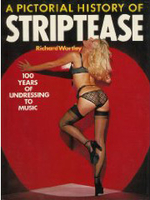
Review: A Pictorial History of Striptease

Dear Constant Reader,

Our apprentice Electrix wanted to pick our brains about burlesque in London, since she’s hoping to study there (wish her luck!). I remembered this book included a section on burlesque in London and then I realized I’d not given you a proper review.

A Pictorial History of Striptease: 100 Years of Undressing to Music by Richard Wortley (1976)

This book is exactly what it promises: pages and pages of photographs of women taking (or having taken) their clothes off, plus related ephemera, like programs and advertisements. The illustrations are broken up by text on striptease, its history and evolution. Many of the pictures are full page and in color. There are plenty that are not the standard fare of burlesque books. However, as the book was published in the mid-seventies, there are a lot of contemporary photos of topless showgirls with amusing hairstyles

Thew books begins with a history of striptease from its 19th century origins to the present day. Then it looks specifically at Paris, Britain, and the United States. Paris, of course, highlights the Moulin Rouge, the Follies Bergère, and Crazy Horse, but there are photos of showgirls at other cabarets. Britain focuses on the Windmill Theatre (we never closed!) and the nightclub empire of Paul Raymond. There’s also a mention of Arthur Fox in Manchester who imported many performers from the US. The US looks at the showgirls of Las Vegas and Carol Doda (and Them) among others. Tempest Storm gets a mention right on the first page.

The book also delves into striptease and nudity on film. That includes scenes like Marilyn Monroe and her flying skirt as well as actual nude scenes. This is followed by a chapter on the rivals to striptease on stage, like live sex shows, porn movies, and various topless businesses. The very last chapter is an illustrated how-to for performing your very own striptease. It pairs very nicely with Libby Jones’s striptease.

It’s a great look at striptease and how it was up to the mid-1970s. Some of the photos are absolutely ridiculous in sort of a wonderful way, like the woman dangling her bra above a dolphin like a herring. Some are a study in glamour. In many of the photos, the performers are more naked than burlesque performers today. In fact, in the chapter on the US, American performers are seen as quaint for wearing pasties and G-strings. My biggest wish is that the photos had been dated. I’d love to know more about some of them.

It’s long out of print, but you can find it used for a reasonable price.

M2These writings and other creative projects are supported by my Patrons. Thank you so much! To become a Patron, go to my Patreon page. Or you can just tip me if you liked this.

Published in: on 11 September 2019 at 3:15 pm  Leave a Comment  
Tags: ,

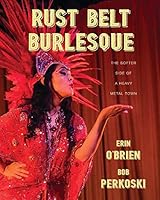
Review: Rust Belt Burlesque

Dear Constant Reader,

Although I still have a huge pile of books to review, here’s a book that’s hot off the presses!

Rust Belt Burlesque: The Softer Side of a Heavy Metal Town by Erin O’Brien and Bob Perkoski (2019).

Rust Belt Burlesque is a photo collection highlighting burlesque in Cleveland, specifically burlesque produced by Bella Sin and appearing at the Beachland Ballroom. However, it’s not just pages and pages of photos, there’s also extensive text.

Part one is a biography of Bella Sin, who was instrumental in creating the lively neo-burlesque scene Cleveland. She’s not a native of Cleveland, but has made the city her home and burlesque her passion. Part two is a history of burlesque in Cleveland, highlighting the infamous, and now demolished, Roxy theatre.

The bulk of the book is the section of photos taken at shows at the Beachland Ballroom. There are a few posed pictures and a few photos were taken backstage or of the vendors in the hallway, but most are shots taken during performances. They’re action shots with some of the issues that come from motion, but for the most part they are dynamic and flattering. The venue has had terrible stage lighting in the past and it shows in some of the photos, but mostly it creates a moody atmosphere. There a certain excitement at seeing a performer “caught in the act” and shots of billowing fabric and bodies in motion create that feeling. Bella Sin curates shows with a strong commitment to diversity, so you’ll see a wide range of performer types.

The majority of the photos seem to be from the 2017 Ohio Burlesque Festival, although there are some from other years and other shows. The photos that were taken at festivals aren’t necessarily of performers from Cleveland, but all over the country, but you can’t tell who’s local and who’s not from the captions. The captions do identify the performer and the year and often a brief description.

The pages of photographs are interspersed with writings about the burlesque experience — from the audience and performers backstage and onstage. There’s a discussion of candy butchers of burlesque past which segues into a look at the vendors at the festivals. There’s also an essay about the history of the Beachland Ballroom, where all this happens.

The last section of the is black and white portraits of five Cleveland performers out of drag and a short statement from each one about their relationship with burlesque.

Full disclosure, I was included in the book:

The title of the book is a bit misleading, as the Rust Belt is comprised of several states and this is just burlesque in Cleveland, or rather just the shows Bella Sin produces at the Beachland Ballroom, which draw performers from outside the area as well. However, the delight and pride of locals in the burlesque shows come through on every page.

M2These writings and other creative projects are supported by my Patrons. Thank you so much! To become a Patron, go to my Patreon page. Or you can just tip me if you liked this.

Published in: on 27 August 2019 at 4:34 pm  Leave a Comment  
Tags: , ,

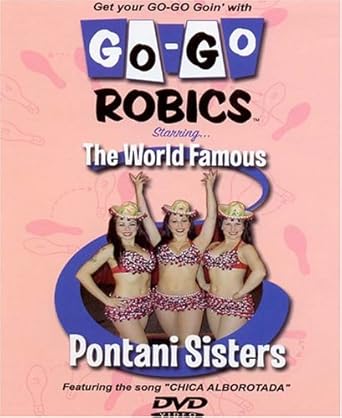
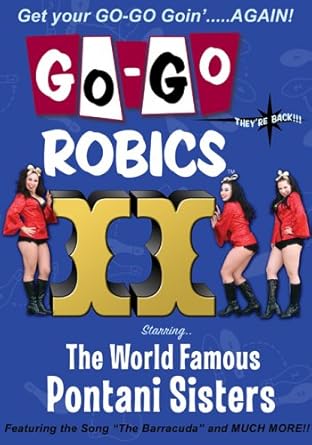
Video Review: Go-Go-Robics and Go-Go-Robics II

Dear Constant Reader,

These may have been the first burlesque-related DVDs I bought when I was just starting out *mumble* years ago. I still think they’re a ton of fun.


On each DVD Angie, Tara, and Helen take you through a high-energy go-go routine that will definitely get your blood pumping. The music is catchy and they wear adorable home-made go-go outfits. Each video has a warm-up, a cool down, a step by step breakdown of the moves, a run of the entire routine with captions, and a chance to do it without coaching. The moves are perky and have cute names. The Pontanis are also perky and cute.

The original Go-Go-Robics is to “Chica Alborotada” by Los Straightjackets featuring Big Sandy. The three of them wear ridiculous tiny sombreros and go-go outfits covered in ball fringe. This routine is mostly classic go-go moves like the Mashed Potato and the Twist.

Go-Go Robics II uses the song “The Baracuda” by the 5.6.7.8’s. The routine contains almost twice as many dance moves, many of them named by the Pontanis, like Jazzercise Throwdown and Fancy Dancer Jog, although there are traditional moves like the Freddy and Pony.

Personally I like Go-Go-Robics 2 better, but that’s because of all the extras.

There’s “Five Minutes of Fun”, which is more like 10 minutes. You will learn a smattering of go-go moves, none of which were used in the workout. Some are classics like the Hully Gully and some were invented by the Pontani Sisters. There’s even a couple named after them, like “Angie’s Applesauce Stomp”. Then there’s little routine to practice them all.

There are two videos of Pontani Sisters’ routines: “Sterno” (with actual horses!) and “Italian Princess”. It’s a nostalgia trip — I saw “Italian Princess” when we performed with Burlesque-A-Pades.

My favorite by far is “In the Kitchen”, where the ladies cook four Italian specialties. It’s a blast to watch as they drink wine and walk you through how to make the dishes. You’ll want to be smashin’ and bashin’ garlic with a big glass of red after you watch this! I make Angie’s Gravy (marinara sauce) pretty much every summer and I always keep a stash in the freezer. Zuppe Ingese was a big hit too.

You can get the DVDs on Amazon for ridiculous prices or you can buy Go-Go-Robics II directly from Angie for a steal!

Angie also released a couple of solo go-go DVDs. Perhaps I’ll review those next.

M2These writings and other creative projects are supported by my Patrons. Thank you so much! To become a Patron, go to my Patreon page. Or you can just tip me if you liked this.

Published in: on 20 August 2019 at 12:50 pm  Leave a Comment  
Tags: , ,

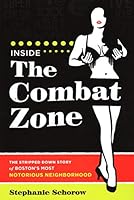
Review: Inside The Combat Zone

Dear Constant Reader,

I love burlesque history — all the glitz and glamour of days gone by. But I also think it’s important to know about the less savory portions of our art, like carnivals. I’m particularly interested in Boston’s Combat Zone, where burlesque went after Scollay Square was demolished. I was very excited to learn about this new book and even more so when Scratch invited the author to speak at The Expo.

Schorow, Stephanie. Inside The Combat Zone: The Stripped Down Story of Boston’s Most Notorious Neighborhood, 2017.

The Combat Zone, officially designated the “Adult Entertainment District” (AED), was the area around lower Washington Street, bordering Chinatown. It was the city’s attempt to contain the adult businesses that had already moved into the area. City officials hoped for an exciting and naughty destination, with porno theatres, dirty book shops, and burlesque houses, carefully controlled. What they ended up with was a sleazy area of XXX shows, strip clubs, prostitution, pickpockets, and drugs.

After the destruction of Scollay Square (and the burlesque theaters for which it had been famed) so the new Government Center could be built on the rubble, the seamier entertainments began congregating around Washington Street. Knowing that an outright ban would just cause the businesses to move elsewhere (and that might be someplace with higher property values…), the straight-laced and puritanical Boston decided to make one legally-zoned area for adult businesses.

Schorow’s book deals a lot with the political, social, and zoning issues of The Combat Zone, but of course, she also writes about burlesque. None of the theaters originally in Scolllay Square, like the Old Howard or The Casino, moved to Washington Street, but there were plenty of new locations to see striptease. The infamous Pilgrim Theatre wanted to bring back classic burlesque and booked such well-known practitioners as Tempest Storm and Blaze Starr, but it was Fanne Foxe that made history there, with her relationship with Congressman Wilbur Mills and his unexpected appearance on stage with her.

I was delighted to learn the story of Miss Bicentennial and even more so to meet her at a book event. Julie Jordan made the Boston Herald when she stripped at City Hall Plaza in 1976. “Right on the grave of old Scollay Square”, she peeled off her star-spangled Hedy Jo Star costume.

Schorow’s book takes you through the history of the Combat Zone, from its well-intentioned beginnings through the quick slide to a dangerous area of mobsters and murder to its dwindling when adult businesses were shut down in favor of restaurants, condos, and other more “reputable” businesses. The last remnants of the Combat Zone are two strip clubs on LaGrange St. Most Bostonians don’t miss the chaos and the crime, but it was part of our past and all burlesque performers in the area should know of it.

Special bonus: the cover art is based on a photo of Satan’s Angel who was interviewed for the book, along with a few other women who worked in the clubs of the Zone.

M2These writings and other creative projects are supported by my Patrons. Thank you so much! To become a Patron, go to my Patreon page. Or you can just tip me if you liked this.

Published in: on 10 June 2019 at 2:42 pm  Leave a Comment  
Tags: , ,

Review: More Havoc

Dear Constant Reader,

Today we return to the life of June Havoc, Gypsy Rose Lee’s younger (and most say more talented) sister with her second memoir.

More Havoc by June Havoc (1980)

More Havoc begins where Early Havoc leaves off. June, barely in her teens, has fled her overbearing mother and the grind of constant work. She longs to be a legitimate actress, but has to sustain herself as a marathon dancer. She looks back at her childhood in vaudeville for a few chapters, but the rest is a straight-forward narrative, without the shift between past and present of her first book.

June, a pro on the marathon dance circuit, leaves the grueling competitions when a promoter falls in love with her and has his syndicate hire her as his driver while he looks for new venues. Really, it’s a cross-country camping vacation, but she’s getting paid for it. She also reconnects with her husband, Bobby. She doesn’t want to be tied to any man, especially one who doesn’t want her to follow her dream, and decides to leave them both and have her own family.

Pregnant, she begins working hard as a entertainer, saving for her daughter (she’s sure it will be a girl). Ultimately she has to go back to New York and live with her mother, who is running a social club for lesbians out of the spacious apartment Gypsy bought her. At first June is told to hide in her room during the parties, but is soon pressed into service dispensing bathtub booze and plates of cheap spaghetti to her mother’s clientele. This arrangement lasts until the sisters discover that their mother was charging them both for June’s rent and Gypsy’s boyfriend gives June some cash (which Mother tries to filch) to get her own place.

June is ecstatic to start a new life with her daughter, April, but she has no real support and no job. Her mother offers to adopt April and “do for her what I tried to do for you”, but June is never going to be that desperate. After struggling to get by, a lucky break lands June a job as a mannequin, modeling gowns for a fashion house. With every scrap of free time she makes the rounds of booking agents. She finally lands a performance job which leads to another and another.

She marries (and divorces) a Harvard man who fancies himself a writer. She abandons “Jeannie Reed”, her name from when she was hoofing with her husband, which she also used during the marathons. She panics as she’s writing “June Hovick” on a contract, since her sister was forced by prudish Hollywood to perform as Louise Hovick and her movies failed. Instead, it comes out “Havoc”. She doesn’t like it, but it sticks.

Then comes Pal Joey. June is cast in the new musical as Gladys Bumps, a small comedic role that keeps getting bigger and bigger as the director discovers her talents. At last! A Broadway show! And then Hollywood comes calling… Soon June is shuttling across the country between Hollywood and Broadway. June and Gypsy become closer. For a few years, the sisters live together in Gypsy’s huge house in New York City.

The book ends with June’s show-stopping performance on opening night of Mexican Hayride in try-outs in Boston. Her sister, in disguise, is in the audience, having stayed up all night to help June with her costume.

It’s impossible to tell the story of the Hovick sisters without acknowledging the dominating presence of their mother. Gypsy’s memoir portrays her mother as a needy woman, beautiful and fragile, humorously eccentric, in a fantasy world of her own devising. Gypsy deliberately makes her “Mother stories” amusing, even after her mother’s death. In this book June depicts a greedy, delusional, sociopathic woman who emotionally and occasionally physically abused her daughters. Both June and Gypsy try to break free of their mother, but only June succeeds. Despite leaving her mother’s control, June is still shadowed by her presence. This memoir is even bookended by scenes of her mother’s deathbed. All June wanted from her mother was love and approval, but once she becomes independent she might as well be a stranger. Mother did not create June Havoc, so she can’t live in reflected glory. To her, June is a failure. Gypsy is the one she clings to and the one she curses as she dies.

This memoir is certainly more positive and uplifting than the first. However, I liked it less. It wasn’t the story; it was the writing. Early Havoc felt more genuine and the writing of this one feels a little forced. Burlesque-wise, there’s more about Gypsy in this volume, as the sisters spend more time together, but not too much about her performances.

M2These writings and other creative projects are supported by my Patrons. Thank you so much! To become a Patron, go to my Patreon page. Or you can just tip me if you liked this.

Published in: on 20 May 2019 at 3:14 pm  Leave a Comment  
Tags: , ,

Review: Early Havoc

Dear Constant Reader,

A book review! I know I’ve been remiss in writing these and I’ve let a huge stack of books just pile up. Today’s book is not so much about burlesque as it is adjacent to burlesque.

Early Havoc by June Havoc (1959)

June Havoc was Gypsy Rose Lee’s little sister, the former Dainty Baby June, vaudeville sensation. She wrote two memoirs about her life in show business. Early Havoc is a bit harder to find, but Scratch used his excellent hunting skills to find a first edition, which had been signed by the author.

Early Havoc alternates chapters between June’s time in vaudeville and her first dance marathon. June was a dance prodigy and from the time she could walk, her mother put her on stage. She was a vaudeville star and even made some movies. As she grew up, the act she had been performing since childhood grew stale and vaudeville declined. June’s mother adamantly refused to let June have an education or any training in dance or acting. She kept her daughter frozen in childhood, unwilling to allow any change. When June was 13 (she thought she might be 16 and her forged birth certificate claimed she was 18) she was desperate to change her life and secretly married Bobby Reed, a dancer from her act. The newlyweds ran away to start a new life and double act.

It was the Great Depression. Vaudeville was dead. June realizes that between her life in show business and her mother’s, let us just say, eccentric view of the child rearing, she has absolutely no idea how to behave in “normal” life. June and Bobby split up in hopes of finding work as solo performers. A $5 booking led June into the brutal world of dance marathons. She took the job at first because the promoter promised 6 meals a day. In a dance marathon, partners have to stay on the dance floor, constantly moving, for as long as possible, in this case, up to three thousand hours. The dancers only get one 11-minute rest break every hour or, later in the marathon, only every two hours. They have to keep moving during meal time and even when called up on stage to entertain the audience with a song, specialty dance, or comedy routine. The teams that stick it out to the end win a cash prize.

June is naive about the dirty dealings on the dance floor, but quickly becomes a pro, a “horse”. After falling victim to tricks from her fellow participants to injure her or make her sick, she learns to keep going no matter what, to lug her sleeping partner around the dance floor, to look pathetic and weak during her time on the performance stage so as to get better “floor money” (tips). She also has to survive the sadistic stunts of the event promoters and their underhanded tactics to make as much money as possible off the backs of the desperate dancers. The marathon participants are pushed beyond exhaustion with grueling “sprints” and “grinds” and “treadmills”. The crueler the events, the more audience they get.

The book ends with the conclusion of the marathon. After making it all the way through, June discovers she’s been cheated out of most of her earnings and prize money. She swears she’ll do just one more marathon, now that she’s wise to the tricks.

What’s the burlesque connection? Throughout the books, when June mentions her sister, it’s to speak in awe of Louise’s intellect and her beauty, but she has little talent for singing and dancing. When June first arrives in New York, desperate, her mother boasts about Louise’s career and all her accomplishments, while treating June as someone she vaguely remembers meeting once upon a time. It’s a shock to discover her beloved older sister is now Gypsy Rose Lee, staring in Minsky’s Ada Onion from Bermuda. June is awestruck by Gypsy’s beauty and stage presence. She describes watching Gypsy’s famous act as Bobby gushes about her sense of humor and good looks. Gypsy herself is a distant presence, hardly noticing her little sister. However, Gypsy kindly gets June and Bobby a spot in the show doing their dance act, but they’re fired after two weeks. Nothing personal — management just has to change up the show.

The whole book is less a tale of show business than a memoir of survival. June knows she’s got a lot against her — raw talent but no training, little education, a selfish and manipulative mother, no support — but she’s determined to make her way in the world. Her story is painful to read at times, especially her assessments of herself and her awkward interactions with “regular” people.

The book ends leaving many questions unanswered: Does she make it out of the world of marathon dances? Does she get out from under her mother’s shadow? Does she find success on stage? Does she ever have a relationship with her sister? Fortunately, there’s another memoir, More Havoc, published 20 years later, answers some of those questions. I’ll review that one next.

One little tidbit — I was excited to realize that the last theatre Dainty June played before she escaped her mother was the Jayhawk in Topeka, KS. I’ll be performing there on June 22 with Hot in Topeka as part of a fundraiser for the theatre!

M2These writings and other creative projects are supported by my Patrons. Thank you so much! To become a Patron, go to my Patreon page. Or you can just tip me if you liked this.

Published in: on 6 May 2019 at 2:40 pm  Leave a Comment  
Tags: ,