Dear Constant Reader,
 It had been years since we presented a winter holiday show and we weren’t really planning on doing so. We were hired for a New Year’s Eve show at The Strand Ballroom and that was enough. And yet, somehow, we found ourselves booked at Deacon Giles (hint: it was Brigitte’s doing) and as long as we were doing that show, why not put it on at The Thalia as well.
All three shows (we do two at Deacon Giles) sold out completely and people were pleading for tickets. That was really nice, since, to be completely honest, Dear Reader, our shows did not do so well earlier the year.
Since timing is tight and the stage is small at Deacon Giles, the show is pretty streamlined. Since we had more space and a more flexible schedule, The Thalia show had a larger cast and a couple more acts.
It went a little something like this:
Betty Blaize: Betty, It’s Cold Outside
A classic. One of Betty’s signature numbers, with her puppet-partner, Dino Martini.
Mina Murray: Three for the Show
This is a brand-new number than I debuted on Friday. I wanted something winter-inspired, rather than something so strongly themed that I could only do it at the holidays. An ice-blue gown and white fur wrap did the trick. It’s very classic in style and a bit raunchier than my usual.
Brigitte Bisoux: The Nutrocker
Brigitte is a talented tap dancer and she loves the stages at both venues because they show off the sound really well. With her sparkling costume and feathered headdress, you’d never know she was too short for The Rockettes.
 Devora Darling: Snowfall
D.D. dances en pointe in this beautiful striptease. She also throws around some tissue paper snow, which is beautiful. It’s also gets everywhere. EVERYWHERE. Someday I should tell you about the first time we used fake snow. Please enjoy this photo of Devora and Devastasia, who also used some of the snow in her act, cleaning up after the show.
Devastasia: Warm in December
Also a new number for Devastasia. She has professed a strong dislike of Christmas, so it was winter-themed for her. She made a lovely blue and silver dress which was over a flame panel skirt and bra.
Scratch: Magic
I think it was a card trick, but I’m not sure of the details. At Deacon Giles it’s very hard to hear what’s happening on stage from the backstage area (the actual distillery and warehouse).
Betty Blaize: Blue Christmas
Betty is a disillusioned Mrs. Claus, who once she’s alone, prefers to celebrate Hanukkah.
Brigitte Bisoux: Perfect Christmas
Brigitte starts out nice, dancing to “Perfect Christmas Night”, a sweet jazzy tune, and then gets naughty to a version of “You’re a Mean One, Mr. Grinch”. You’ll look at Christmas decorations in a new way…
Devora Darling: Christmas Elf
This is a super-adorable dance with Devora as a cute little elf handing out candy canes. And when she runs out of candy, she has clothing to give out.
 Mina Murray: Sugar Rum Cherry
This my holiday fan dance and one of my favorites. At Deacon Giles I performed it solo, but at The Thalia I had Ingride and Gin-ni to open it with a graceful dance with snow-white fans to the traditional Dance of the Sugar Plum Fairy music.
At The Thalia we also had Devastasia, Gin-ni, and Ingride performing “Booty Swing” with oversized peppermint sticks and Gin-ni sang.
All the shows went well and we had great time, for the most part. And there were delicious cocktails at both venues. The early show at Deacon Giles had one rude audience member sitting right up front who was talking with his seat mate through most of the show. It kind of brought the audience’s energy down. However, the second show was just fantastic. The audience was terrific and I think our performances were excellent.
As is my custom, I made a backstage video only for my Patrons. You however can get a brief taste of the show in these video clips Scratch took during the show.
Next up we’ll be at The Strand Ballroom on New Year’s Eve and then The Great Burlesque Expo!
 These writings and other creative projects are supported by my Patrons. Thank you so much! To become a Patron, go to my Patreon page.

 When performing on a particularly small or unusually-shaped stage, mark the same size or shape on your rehearsal space floor.
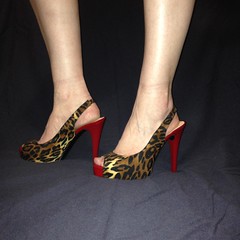 After wearing heels, stretch your calves.


 International burlesque superstar and
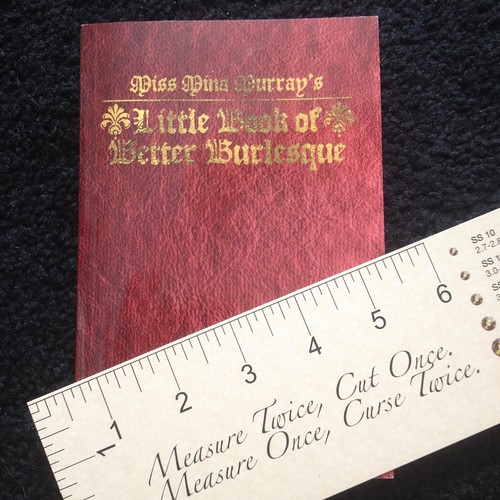 I would be remiss if I didn’t recommend
  Artemisia Vulgaris joined our summer crop of interns in May. Of those three (dubbed “The Axis of Evil” for some reason), she was the only one who continued on into the fall. She started out as backstage help on The Big Time, but once we got to know her, we realized she was going to shine on stage. And so she has.
 Betty reprised her injured striptease, as mentioned above. She also danced with the Devil in her signature piece, as seen in the photo. Betty is also expert with Wings of Isis. Sometimes she does a striptease, sometimes it’s a straight-up dance number, as it was this time. She included a special surprise for this performance — halfway through the dance, her wings lit up! I wish I had a good picture of the multicolored LED wings in action.
 Devastasia’s disturbing bird tormented poor Nicole. She was also an adorable witch in the act she created for our Salem show.
 Scratch mystified and horrified the audience with two dangerous pieces: “The Spike”, which involves attempting not to drive a three-inch steel spike through his hand and “Urban Legend” which involves an apple studded with double-edged razor blades and his mouth. There has never been an incident, but I still can’t watch them.
 Once again Nicole played my naughty maid and I got to spank her in “Mistress & Maid”. Poor Nicole — first a bird, than a sadistic employer. I also presented my fan dance to “Moon Over Bourbon Street”. From where I was, the lighting for that was fabulous.
