Review: Century Girl

Dear Constant Reader,

Today I have for you a fascinating story of the youngest dancer in the Ziegfeld Follies, told in an equally interesting way.
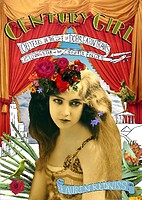
Century Girl: 100 Years in the Life of Doris Eaton Travis, Last Living Star of the Ziegfeld Follies by Lauren Redniss, 2006.

Doris was born in 1904 to a mother, who, her own show biz aspirations thwarted, was determined to make stars of her seven children. When Doris was 7, she and her sisters, Pearl and Mary, made their professional debut in The Bluebird. Adding their little brother Charlie to the cast, the Eaton children toured the country with the show, with Mary and Doris eventually taking the leads. The children were now firmly ensconced in the world of theatre and continued performing.

In 1918 Pearl was in the Ziegfeld Follies and after summer school let out, 14-year-old Doris joined the chorus. Under New York law performers had to be 16 to be in a “musical comedy”, so Doris used the name Lucille Levant until she was old enough. She found her place as a specialty dancer, while Mary became the prima ballerina and Pearl performed in the racier Midnight Frolic. Even brother Charlie did comedy sketches at the Follies with Fannie Brice and W.C. Fields.

Doris began performing in silent films as well. She got married in Hollywood, but was widowed less than a year later at 19. For several years she shuttled between the films of Hollywood and the New York stage. Her mother’s Manhattan apartment hosted all manner of show business luminaries, like George Gershwin and Fred Astaire, on their nights off. Everything was going splendidly for the performing Eatons, until…

…the Great Depression destroyed the lavish shows like the Follies and diminished Broadway. Ziegfeld died. There was no work for performers. Doris was even considering becoming a taxi dancer when a fortunate phone call sent her to Arthur Murray’s dance studio. She became an instructor, then a promoter, and opened the first franchise, in Detroit. She wrote a dance advice column for the local paper and the number of her studios grew. Her brothers helped her run them, but unfortunately, her sisters did not join her. Their stories do not end well.

Doris met her husband, Paul Travis, through her dance studio empire, which she continued to manage, even as the couple ran a turkey farm. Ever the performer, Doris began hosting a weekly social dance show on TV in 1952. Everything was going well until social dancing died out in the 1960s. Doris extricated herself from the business and started over. Again. She and Paul moved to Oklahoma and managed a horse ranch. She went to college and graduated Phi Beta Kappa.

Doris returned to the stage where it all began in 1997. She was invited to the opening of the refurbished New Amsterdam Theatre. Five former Follies Girls attended, but Doris was the only one who could still dance. She performed “Mandy”, a soft shoe number she had danced in 1919, when she shared that very stage with Eddie Cantor.

I said at the start the method of telling Doris’s story was just as interesting as her life. It’s like flipping through a scrap book. Every page is filled with photographs, line drawings, and newspaper clippings, illustrating Doris’s life. The handwritten text wanders through the images of Doris’s long life. It’s probably just easier to show you.

This creative biography pays loving tribute to Doris Eaton’s long life of dance. Much of it is in Doris’s own words, looking back over a century. If you’re only interested in the Follies, that’s section II — the shows, the performers, Ziegfeld himself, and of course, the experiences of Doris and her sisters.

(Affiliate links in this post benefit the American Burlesque Collection, a 501(c)(3) non-profit)

M2These writings and other creative projects are supported by my 14 Patrons. Thank you so much! To become a Patron, go to my Patreon page. Or you can just tip me if you liked this.

Published in: on 4 March 2021 at 2:48 pm  Leave a Comment  
Tags: ,

Review: Burlesque

Dear Constant Reader,

Time for another review. I’m tired of having a stack on unreviewed books on my desk!

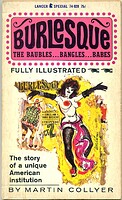
Burlesque: The Baubles…Bangles…Babes by Martin Collier (1964).

This is a little paperback, just 150 pages, printed on cheap pulp paper that’s now crumbling. The only vaguely high-end thing about it is a several full page photographs and a fold-out page in color. This
“story of an unique American institution” was written when the business was limping along and its part-nostalgic, part-snarky, part-affectionate tone reflects that. The back cover promises “An under the bangles look at a dying art that still has lots of snap left!”

The book focuses on comics and strippers, presenting them in alternating chapters. The chapter titles vaguely classify the performers, but it’s a thin rationale. Sherry Britton, Sally Rand, Lili St. Cyr, and Lilly Christine are profiled in a chapter called “The ‘Non’-Strippers.” Most of the performers profiled are still well-known today (Gypsy Rose Lee, Rose La Rose, Dixie Evans), with a few less famous, like Brandy Martin and Penny Wolfe.

The most valuable parts of the book are interviews with performers, including transcribed recordings made by Ann Corio and Redd Foxx. Reading about burlesque from the lips of these legends is worth seeking out this book.

It ends with a fairly gloomy prediction about the future of burlesque — there are more strippers, but fewer talents, too many gimmicks. He does predict burlesque will still be alive in 1990, if nowhere near what it once was.

If you can find it, give it a read, but don’t pay too much for a copy.

M2These writings and other creative projects are supported by my Patrons. Thank you so much! To become a Patron, go to my Patreon page.

Published in: on 2 September 2020 at 2:35 pm  Leave a Comment  
Tags:

Review: Brown Skin Showgirls

Dear Constant Reader,

Although I still have a huge pile of books to review, today I’m grabbing the newest addition to my library from the top of the pile.

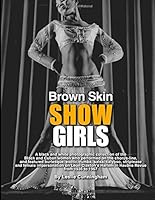
Brown Skin Showgirls by Leslie Cunningham, 2017.

This slim paperback showcases photographs from Leon Claxton’s Harlem in Havana, a revue with Black and Cuban entertainers that toured with Royal American Shows from 1936 to 1967. Royal American was the carnival with which both Sally Rand and Gypsy Rose Lee toured, and just a few tents away Harlem in Havana also presented striptease as well as Latin and Caribbean dances.

The book is almost entirely photographs with captions, but very little other text other than a short introduction to the history of the show. Some of the stars of the show are highlighted, like The Bates Sisters (including the author’s grandmother), The Cuban Dancing Dolls, and female impersonator Greta “Garbage” Garland. It certainly left me wanting more!

Don’t get me wrong — The photos are absolutely worth the price of admission. Pages and pages of performers on stage (and occasionally off). Performance photos are so much rarer than publicity photos and photos of Black burlesque performers are very scarce. This book is a treasure trove! And you can get a good look at the costumes too.

I was happy to hear that Cunningham is going to expand on the story of Harlem in Havana with the documentary film, Jig Show: Leon Claxton’s Harlem in Havana. It should be out soon (all things depending on the pandemic, of course). I want to learn more about the performers in these tantalizing photographs.

Order your book direct from the author and she’ll sign it for you!

I want to thank Jo Weldon’s NYSB Book Club for arranging for Bebe Bardeaux‘s great interview of Leslie Cunningham about Brown Skin Showgirls, Harlem in Havana, and Jig Show.

M2These writings and other creative projects are supported by my Patrons. Thank you so much! To become a Patron, go to my Patreon page. Or you can just tip me if you liked this.
Published in: on 12 August 2020 at 3:10 pm  Leave a Comment  
Tags: , , ,

Review: Gypsy and Me

Dear Constant Reader,

Not only do I have a pile of books to review, I also have a passel of books I reviewed elsewhere, but not here. Since I’m on a bit of a history kick (I’ll explain why in another missive), here’s Gypsy Rose Lee’s son’s memoir about growing up with America’s most famous stripper as a mother.

Gypsy and Me: At Home and on the Road With Gypsy Rose Lee by Erik Lee Preminger (1984). Also published as My G-String Mother.

Picking up years after Gypsy left off, Gypsy Rose Lee’s only child chronicles his conflicted and often combative relationship with his famous mother. The story begins when Erik was 12 and Gypsy has decided to give up “the act”, the striptease show she’s been doing for decades. Now she needs another source of income.

His depiction is not always so flattering. He shows a Gypsy that was stingy, self-absorbed, and domineering. She was terrified of poverty, despite her frequently lavish spending, and constantly searched for the next thing that would support her. The author paints a flawed portrait of himself as well, honestly relating incidents of his anger, disobedience and petty crime.

Despite all the clashes between them, he loved her deeply and she was a devoted mother. She would take Erik on tour with her because she hated to be separated from him. He would help her set up her act and was even her dresser. She was a terribly hard worker, throwing herself into projects, barely eating and rarely sleeping. He describes her with tea stains on her clothes and cigarette ashes powdering her reading glasses. She was witty and clever in private, as well as in her public image. And she adored animals, sometimes more than people. She was terribly proud of Erik and wanted everyone to know he was her son. She even toured Southeast Asia to entertain the soldiers after Erik joined the Army.

Despite a truly unusual and often difficult childhood, Mr. Preminger is not bitter about his mother, and strives for an honest accounting of a very contradictory woman.

M2These writings and other creative projects are supported by my Patrons. Thank you so much! To become a Patron, go to my Patreon page. Or you can just tip me if you liked this.

Published in: on 30 July 2020 at 4:27 pm  Leave a Comment  
Tags: , ,

Review: Legends of Burlesque, Then and Now

Dear Constant Reader,

I’m catching up on my book reviews! The Burlesque Hall of Fame is usually a chance to meet our Legends in person. However, it’s happening virtually this year. While trying to decide if I should submit something for the on-line showcase (answer — probably not), I was flipping through this book.

Legends of Burlesque, Then and Now presented by Gina Bon Bon and Julie Mist, 2018

This is a collection of photographs of burlesque legends, from their glory days onstage and also from the present day. It’s a large format hardcover book, but with matte paper pages, which make the photos seem slightly muted. Each Legend is featured on at least two, sometimes more, pages of photographs, with a Quick Facts side bar with, generally, their legal names, career span, acts, and prominent bookings or awards. Some have additional brief information and anecdotes. Toni Elling talks about dealing with racism and Kitten Natividad about surviving cancer. Many reveal what they have been doing since they left the stage.

Also included are a couple of people (and a place) who don’t actually qualify as legends, but have been important to honoring the legends and keeping their legacy alive. The place, of course, is the Burlesque Hall of Fame.

The book opens with profiles of some prominent performers (and a couple of lesser known ones) who had passed away, like Ann Corio and Dixie Evans. Sadly, since the book was prepared, a few of the Living Legends are no longer with us. Our legends are a dwindling resource and should be cherished.

This is by no means a comprehensive volume, either in subject or scope. There are just over 3 dozen performers covered, which doesn’t include everyone considered a legend. The information about them is just a tantalizing taste of their stories. There are other books and documentaries that cover more, but this work was created by legends about their fellow legends which gives it an interesting perspective and a bias quite different from works created by those outside the industry.

I had a fantasy of going to BHoF and overcoming my shyness to meet as many of the Legends as I could, but alas, not this year. While we’re unable to gather in person this year, perhaps reach out to your favorite legend and just say thank you for creating the path we follow.

M2These writings and other creative projects are supported by my Patrons. Thank you so much! To become a Patron, go to my Patreon page. Or you can just tip me if you liked this.

Published in: on 30 June 2020 at 2:53 pm  Leave a Comment  
Tags: , ,

Review: In the Kitchen: Dollface Kitchen

Dear Constant Reader,

New book review for you!

Dollface Kitchen by Cherry Dollface (2020)

This is the second book from pinup model and vintage enthusiast, Cherry Dollface. (I’ve had her first book since it came out and never reviewed it — must be better about that…) As you probably guessed from the title, it’s a cookbook. You know how much I love cooking, especially vintage recipes! She was supposed to have a book release party at Viva, but instead it got moved to FB and IG Live. It was fun to watch her sign my book on-line, but I miss author events…

It’s probably not the best timing to try to review a cookbook during lockdown, since mostly I have to look at the recipes and sigh. The book is organized into six categories, of the sort you would expect like main dishes and desserts. Each of those has three “Healthy-ish” recipes, three “Not-so-healthy”, and two vintage recipes — one “weird” and one “wonderful”. The vintage recipes are the sort found on boxes and cans and I’m unclear if she’s actually cooked any of them. All recipes are marked if they are vegetarian, vegan, dairy-free and/or gluten-free.

As you might expect of a pin-up model, the book is full of photographs. Cherry is shown posing with food, in the kitchen, or just making faces (usually at a weird vintage recipes). There are also tempting photos of all the dishes (except some of the vintage ones). Everything looks bright and fun. I’m looking forward to trying several of these, like the carnitas tacos, baked oatmeal, and caramel apple bread pudding. I can’t wait to cook for friends again!

All of Cherry’s recipes have notes from her about how to change things up or her personal preferences (she doesn’t like onions) in the header of the recipe. She also tells you if the recipe can be changed up to fit diet requirements, like swapping out chicken broth for veggie to make a soup vegetarian. I really like the little cartoon bubbles with another helpful tip. You know I’m all about the helpful tips… It’s a very friendly book, occasionally even silly, like the recipe that starts, “Preheat oven to 450. Just kidding, this is fruit salad.” She writes as though she’s chatting with you, which is nice in this kind of lonely time.

I couldn’t review the book without making something. The “wonderful” vintage dessert Fudge Batter Pudding had the note “If you try any of my vintage recipes…try this bad boy!” So I did. You make a simple chocolate sauce that goes in the bottom of a baking pan, then you spoon a chocolate batter on top and bake. The result is a sort of brownie with a fudgy sauce underneath it. The cake part is on the dry side (it has no eggs and only a smidge of butter and milk), so it needs the sauce. When we had it cold the next day, a little cream poured over was a nice addition. It was easy to make and can be whipped up from pantry staples, so I’ll call it a win.

The book is only available from Working Class Publishing, but I think you can still get a signed copy. It may take longer to get to you, but where else do you have to go…?

M2These writings and other creative projects are supported by my Patrons. Thank you so much! To become a Patron, go to my Patreon page. Or you can just tip me if you liked this.

Published in: on 14 May 2020 at 12:52 pm  Leave a Comment  
Tags: , ,

Review: In the Kitchen: The Necronomnomnom

Dear Constant Reader,

If you follow me on Instagram, you’ve seen some photos lately of dishes with rather odd names and a sinister tome in the background. What is up with that? I’ve been cooking from…

The Necronomnomnom
It’s a cookbook, but a truly special one. It’s full of rituals and rites, illustrated with arcane sketches and notes, which must be interpreted to achieve tasty results. As you might have guessed from the title, it’s a Lovecraft-themed cookbook. There are fifty recipes, including cocktails, appetizers, entrees, side dishes, desserts, and even recipes for children (that is, for children to eat, not how to cook them). As the names evoke eldritch horrors, so do the presentations, with odd colors, additional tentacles, or inscribed runes (all edible, of course).

The recipes have terribly wonderful Lovecraft pun names, like The Sandwich Horror or The Custard from Out of Space. But in order to cook them, you have to puzzle through the ingredient lists and instructions, which are written in archaic and mystical fashion — even poetry. The degree of obscurity varies from recipe to recipe, from relatively straightforward in terms of ingredient names and measurements to rather baffling at first glance.

Here, for example are the ingredients for Deep Fried Deep One, the first dish I cooked.

What is the Herb of Mysterious Purpose? The Bay of Elders? It helps to be an experienced cook, because once you figure out what the dish is, things start to fall in place. I was often chuckling at the cleverness of the authors or feeling smug that I puzzled things out.

And the instructions for The Oats of Dagon.

I’ll admit, this was a challenging one! I’m not even sure how many times I read and misinterpreted the instructions before I finally got it.

The illustrations are very detailed and in perfect keeping with the theme. Be sure to read all the scribbled little notes — there’s a story running through the book. Here’s a little taste of the artwork:

I managed to get my hands on a first, or Grimoire, edition, which is only the mystic rituals. There’s really nothing to break the illusion that this is a mysterious spell book and the cover is pretty horrifying. There was also a super-special edition with a three-dimensional flayed skin* cover, for that extra touch of realism.

Don’t worry if the thought of figuring out the ingredients and instructions fills you with fear. The “Bookstore Edition“, which comes out in just a few days, has all the rituals and illustrations, but also practical additions like a table of contents, index, and… all the recipes in clear language in an appendix in the back. I’ve had a lot of fun figuring out the recipes, but I know that’s not for everyone.

I’ve been really happy with most of the results! I’ve also had fun bringing out The Manor’s spookiest china and arranging the tentacles just right for a good photo. Here’s some New England Damned Chowder:

For more delicious photos of my endeavors so far and some commentary on the recipes, I’ve created a photo gallery just for my Patrons.

Highly recommended for creative cooks, lovers of puzzles, and weird fiction fans.

*Or maybe cast latex…

M2These writings and other creative projects are supported by my Patrons. Thank you so much! To become a Patron, go to my Patreon page. Or you can just tip me if you liked this.

Published in: on 25 September 2019 at 3:19 pm  Leave a Comment  
Tags: ,

Review: A Pictorial History of Striptease

Dear Constant Reader,

Our apprentice Electrix wanted to pick our brains about burlesque in London, since she’s hoping to study there (wish her luck!). I remembered this book included a section on burlesque in London and then I realized I’d not given you a proper review.

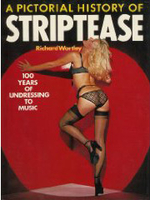
A Pictorial History of Striptease: 100 Years of Undressing to Music by Richard Wortley (1976)

This book is exactly what it promises: pages and pages of photographs of women taking (or having taken) their clothes off, plus related ephemera, like programs and advertisements. The illustrations are broken up by text on striptease, its history and evolution. Many of the pictures are full page and in color. There are plenty that are not the standard fare of burlesque books. However, as the book was published in the mid-seventies, there are a lot of contemporary photos of topless showgirls with amusing hairstyles

Thew books begins with a history of striptease from its 19th century origins to the present day. Then it looks specifically at Paris, Britain, and the United States. Paris, of course, highlights the Moulin Rouge, the Follies Bergère, and Crazy Horse, but there are photos of showgirls at other cabarets. Britain focuses on the Windmill Theatre (we never closed!) and the nightclub empire of Paul Raymond. There’s also a mention of Arthur Fox in Manchester who imported many performers from the US. The US looks at the showgirls of Las Vegas and Carol Doda (and Them) among others. Tempest Storm gets a mention right on the first page.

The book also delves into striptease and nudity on film. That includes scenes like Marilyn Monroe and her flying skirt as well as actual nude scenes. This is followed by a chapter on the rivals to striptease on stage, like live sex shows, porn movies, and various topless businesses. The very last chapter is an illustrated how-to for performing your very own striptease. It pairs very nicely with Libby Jones’s striptease.

It’s a great look at striptease and how it was up to the mid-1970s. Some of the photos are absolutely ridiculous in sort of a wonderful way, like the woman dangling her bra above a dolphin like a herring. Some are a study in glamour. In many of the photos, the performers are more naked than burlesque performers today. In fact, in the chapter on the US, American performers are seen as quaint for wearing pasties and G-strings. My biggest wish is that the photos had been dated. I’d love to know more about some of them.

It’s long out of print, but you can find it used for a reasonable price.

M2These writings and other creative projects are supported by my Patrons. Thank you so much! To become a Patron, go to my Patreon page. Or you can just tip me if you liked this.

Published in: on 11 September 2019 at 3:15 pm  Leave a Comment  
Tags: ,

Review: Rust Belt Burlesque

Dear Constant Reader,

Although I still have a huge pile of books to review, here’s a book that’s hot off the presses!

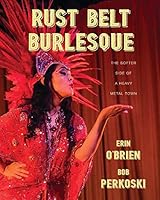
Rust Belt Burlesque: The Softer Side of a Heavy Metal Town by Erin O’Brien and Bob Perkoski (2019).

Rust Belt Burlesque is a photo collection highlighting burlesque in Cleveland, specifically burlesque produced by Bella Sin and appearing at the Beachland Ballroom. However, it’s not just pages and pages of photos, there’s also extensive text.

Part one is a biography of Bella Sin, who was instrumental in creating the lively neo-burlesque scene Cleveland. She’s not a native of Cleveland, but has made the city her home and burlesque her passion. Part two is a history of burlesque in Cleveland, highlighting the infamous, and now demolished, Roxy theatre.

The bulk of the book is the section of photos taken at shows at the Beachland Ballroom. There are a few posed pictures and a few photos were taken backstage or of the vendors in the hallway, but most are shots taken during performances. They’re action shots with some of the issues that come from motion, but for the most part they are dynamic and flattering. The venue has had terrible stage lighting in the past and it shows in some of the photos, but mostly it creates a moody atmosphere. There a certain excitement at seeing a performer “caught in the act” and shots of billowing fabric and bodies in motion create that feeling. Bella Sin curates shows with a strong commitment to diversity, so you’ll see a wide range of performer types.

The majority of the photos seem to be from the 2017 Ohio Burlesque Festival, although there are some from other years and other shows. The photos that were taken at festivals aren’t necessarily of performers from Cleveland, but all over the country, but you can’t tell who’s local and who’s not from the captions. The captions do identify the performer and the year and often a brief description.

The pages of photographs are interspersed with writings about the burlesque experience — from the audience and performers backstage and onstage. There’s a discussion of candy butchers of burlesque past which segues into a look at the vendors at the festivals. There’s also an essay about the history of the Beachland Ballroom, where all this happens.

The last section of the is black and white portraits of five Cleveland performers out of drag and a short statement from each one about their relationship with burlesque.

Full disclosure, I was included in the book:

The title of the book is a bit misleading, as the Rust Belt is comprised of several states and this is just burlesque in Cleveland, or rather just the shows Bella Sin produces at the Beachland Ballroom, which draw performers from outside the area as well. However, the delight and pride of locals in the burlesque shows come through on every page.

M2These writings and other creative projects are supported by my Patrons. Thank you so much! To become a Patron, go to my Patreon page. Or you can just tip me if you liked this.

Published in: on 27 August 2019 at 4:34 pm  Leave a Comment  
Tags: , ,

Review: Inside The Combat Zone

Dear Constant Reader,

I love burlesque history — all the glitz and glamour of days gone by. But I also think it’s important to know about the less savory portions of our art, like carnivals. I’m particularly interested in Boston’s Combat Zone, where burlesque went after Scollay Square was demolished. I was very excited to learn about this new book and even more so when Scratch invited the author to speak at The Expo.

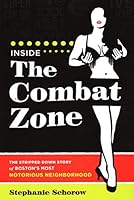
Schorow, Stephanie. Inside The Combat Zone: The Stripped Down Story of Boston’s Most Notorious Neighborhood, 2017.

The Combat Zone, officially designated the “Adult Entertainment District” (AED), was the area around lower Washington Street, bordering Chinatown. It was the city’s attempt to contain the adult businesses that had already moved into the area. City officials hoped for an exciting and naughty destination, with porno theatres, dirty book shops, and burlesque houses, carefully controlled. What they ended up with was a sleazy area of XXX shows, strip clubs, prostitution, pickpockets, and drugs.

After the destruction of Scollay Square (and the burlesque theaters for which it had been famed) so the new Government Center could be built on the rubble, the seamier entertainments began congregating around Washington Street. Knowing that an outright ban would just cause the businesses to move elsewhere (and that might be someplace with higher property values…), the straight-laced and puritanical Boston decided to make one legally-zoned area for adult businesses.

Schorow’s book deals a lot with the political, social, and zoning issues of The Combat Zone, but of course, she also writes about burlesque. None of the theaters originally in Scolllay Square, like the Old Howard or The Casino, moved to Washington Street, but there were plenty of new locations to see striptease. The infamous Pilgrim Theatre wanted to bring back classic burlesque and booked such well-known practitioners as Tempest Storm and Blaze Starr, but it was Fanne Foxe that made history there, with her relationship with Congressman Wilbur Mills and his unexpected appearance on stage with her.

I was delighted to learn the story of Miss Bicentennial and even more so to meet her at a book event. Julie Jordan made the Boston Herald when she stripped at City Hall Plaza in 1976. “Right on the grave of old Scollay Square”, she peeled off her star-spangled Hedy Jo Star costume.

Schorow’s book takes you through the history of the Combat Zone, from its well-intentioned beginnings through the quick slide to a dangerous area of mobsters and murder to its dwindling when adult businesses were shut down in favor of restaurants, condos, and other more “reputable” businesses. The last remnants of the Combat Zone are two strip clubs on LaGrange St. Most Bostonians don’t miss the chaos and the crime, but it was part of our past and all burlesque performers in the area should know of it.

Special bonus: the cover art is based on a photo of Satan’s Angel who was interviewed for the book, along with a few other women who worked in the clubs of the Zone.

M2These writings and other creative projects are supported by my Patrons. Thank you so much! To become a Patron, go to my Patreon page. Or you can just tip me if you liked this.

Published in: on 10 June 2019 at 2:42 pm  Leave a Comment  
Tags: , ,