Review: Woman to Woman

Dear Constant Reader,

I’ve just acquired some new books, so I have to step up the reviewing. At the moment I have more than a dozen books to review — and some of them are the ones that have been in the library the longest!

“Woman to Woman: Ann Corio and the Rehabilitation of American Burlesque.” by Julie N. Vogt, PhD (2010).

I met Julie Uberblonde at the Great Burlesque Exposition of 2010 and we chatted about her doctoral dissertation about Ann Corio. She had some strong opinions about some popularly held beliefs of burlesque history. I was hopeful that she would eventually publish her dissertation as a book for more general audiences. It was a shock to learn that she died this past December. So, it was a little bittersweet to read her dissertation, knowing that there are so few academically researched books on burlesque.

Her main topic is on the creation of Ann Corio’s style of burlesque as a brand and marketing it to women. However, she also uses Ann Corio as a focus to delve into a critical study of burlesque, as a performance art and as a business. Along the way, she provides a review of the existing literature and she dispels some burlesque myths, a number of which Ann Corio appears to have created.

There’s a lot of information and some excellent research, but I’ll be honest — despite the topic, it’s still a doctoral dissertation and parts of it get a bit thick with academese. I’m pretty fluent in academese, so I was able to mine the gold. And there’s a lot of it.

Dr. Vogt’s death was a terrible loss for her family, friends, and students, and also for the study of burlesque.
Published in: on 5 April 2012 at 1:41 pm  Leave a Comment  
Tags:

Review: This Was Burlesque

Dear Constant Reader,

The highlight of the costume exhibit I’m curating at the West End Museum is several costumes worn by Ann Corio in her show This Was Burlesque, courtesy of her niece. In preparation for creating wall text, I’ve been rereading the book that accompanied the show. It seemed like high time to review it. A special thanks to my friends Teresa & Jeff who gave us this autographed copy one New Year’s Eve.

This Was Burlesque by Ann Corio (1968).

Ann Corio was one of the biggest burlesque stars in the Golden Age of Burlesque, especially in Boston. She played the Old Howard frequently and was much beloved of Harvard students. She claimed other colleges referred to her as “Harvard’s baby”, but she was definitely known as “Her Majesty, The Queen”. After her career in burlesque she turned to acting on stage and in B-movies, but just couldn’t forget about burlesque.

In 1962 she and her partner Michael Iannucci opened This Was Burlesque in New York City. A retrospective of comedy, striptease, and chorus girls, it ultimately played all over the country for almost 30 years. It was filmed by HBO in the 70’s, but the VHS tapes are hard to find.

Fortunately, we have Miss Corio’s book. She writes a light history of burlesque as one who was there through most of it. She perpetuates some burlesque myths and creates some new ones, but this is hardly an academic tome. She presented burlesque as cleanly and gently as possible to an audience who wanted something a little naughty, but not too threatening.

The book is illustrated with photographs from her show and as well as historical burlesque performances. There’s a strong emphasis on comics, especially ones who started in burlesque and went on to fame in film and television. She includes a number of scripts for comic sketches.

The book is out of print, but can be found at used book dealers without too much difficulty.

Published in: on 28 March 2012 at 2:37 pm  Leave a Comment  
Tags:

Review: The Happy Stripper

Dear Constant Reader,


Vote for the Boston Babydolls! Voting closes tomorrow!


The Happy Stripper: Pleasures and Politics of the New Burlesque by Jacki Willson.

I think I met the author at the after-party for The Immodest Tease Show in London back in 2006, but I’m not 100% sure — there were a lot of people there. But that’s neither here nor there.

Ms. Willson became interested in exploring the display of women’s bodies in a post-feminist world after seeing a piece of performance art involving striptease. She wonders if burlesque can be both sexy and subversive. Although the performers are putting their bodies on display, are they also fully empowered? Her focus is the examples of Ursula Martinez (performance artist), Immodesty Blaize (UK burlesque superstar), and Dita von Teese (no introduction necessary).

The book is quite academic and densely informative. I suspect it’s was originally the author’s dissertation. It’s not so much about burlesque as an art form but as the background for discussing the social implication and political ramifications of stripping. To really get the most out of this book, it’s helpful to know something of the different waves of feminism and the major players in each.

The focus is predominantly UK-centric, although she does use some US and Australian sources. The bibliography is exhaustive. If you’re looking for a light read on neo-burlesque, this isn’t it. If you’re interested in delving into the philosophies of stripping and feminism, this is your book.

Published in: on 14 March 2012 at 12:12 pm  Leave a Comment  
Tags:

Review: A History of Burlesque

Dear Constant Reader,


Vote for the Boston Babydolls! Voting closes tomorrow!


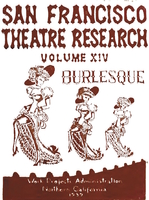
A History of Burlesque by Ettore Rella (1940).

During the Great Depression, the Work Projects Administration put many unemployed people to work. The common image is of hard physicval labor, like roadwork, but the WPA employed artists and writers as well. One such WPA sponsored project was the San Fransico Theatre Research monograph series. There were at least 15 manuscripts published on the history of theatre in San Francisco, specific theatres, performers, and theatircal genres, including burlesque.

Mr. Rella looks at burlesque from 1850 until the present day, that being 1940. His focus is obviously on appearances of burlesque in San Francisco, but it’s still a good overview of the evolution of burlesque over almost a century. He studies individual shows as well as performers and frequently quotes from the scripts.

If you’re interested in early burlesque, this is a great resource.

Published in: on 13 March 2012 at 10:44 am  Leave a Comment  
Tags:

Review: Weeki Wachee, City of Mermaids

Dear Constant Reader,


Vote for the Boston Babydolls!


Weeki Wachee, City of Mermaids: A History of One of Florida’s Oldest Roadside Attractions by Lu Vickers (2007).

You might remember that I spent a little time learning to swim like a mermaid. For my birthday my mother gave me this history of Weeki Wachee Springs and their famous mermaids. And it’s even signed by the author to “Mermaid Mina”!

It covers the history of this unique attraction from underwater entertainment before Weeki Wachee opened, through the glory years of the City of Live Mermaids, to the decline into kitch, and the recent (successful) Save Our Tails campaign. Many mermaids and others intimately involved with Weeki Wachee contributed interviews as well as memorabilia.

Hardly a page goes by that doesn’t have photographs, postcards, or ads from all eras of Weeki Wachee’s history. I was particularly thrilled to see some of the Former Performing Mermaids and pick out the wonderful women who trained us to swim and pose in a tail.

I know I said I had a lot of burlesque books to review before moving on to other topics. This book does have pictures of Bambi the Mermaid and Julie Atlas Muz in a tail. Does that count?

It’s obvious from this book that those who worked at Weeki Wachee, especially those who have swum in its crystal-clear waters, consider it a magical place. I have to agree — sometimes I still dream of the spring and my short time as a mermaid.

Published in: on 29 February 2012 at 11:46 am  Leave a Comment  
Tags: , ,

Review: Burlesque: Legendary Stars of the Stage

Dear Constant Reader,


Please click and nominate the Boston Babydolls for “Best Burlesque” and Naked Girls Reading for “Best Literary Gang”. Thank you!


Burlesque: Legendary Stars of the Stage by Jane Briggeman (2004).

Jane Briggeman founded the Golden Days of Burlesque Historical Society to find retired burlesque dancers and let them reconnect. The result of these contacts was this book of profiles of dancers (and a couple of comics). The profiles are often verbatim from interviews with the dancers themselves. The book is also full of photographs, magazine covers, and other ephemera.

There is no doubt that the subjects of this book are very close to Ms. Briggeman’s heart. In fact, it’s a little too personal from time to time. In most of the performer essays, she specifies the extent of her relationship — did they meet, just write letters, talk on the phone, or have no contact at all.

There’s now a second edition available. I’m interested to see how it differs from the first.

Published in: on 8 February 2012 at 11:16 am  Leave a Comment  
Tags:

Review: Western Popluar Theatre

Dear Constant Reader,


Please click and nominate the Boston Babydolls for “Best Burlesque” and Naked Girls Reading for “Best Literary Gang”. Thank you!


Western Popular Theatre edited by David Mayer and Kenneth Richards (1977).

This volume is the “Proceedings of a Symposium sponsored by the Manchester University Department of Drama” — a collection of papers on various topics pertaining to popular theatre. If you’re interested in the history of theatre or the social history of theatre, you might find something worth reading.

Myself, I enjoyed the two articles on commedia del’arte, because I used to perform it and it’s the great-great-grandmother of burlesque comedy. It’s interesting to see the evolution and branching of the comedica styles and charcters.

But where’s the burlesque you may ask? In the paper “Strippers and Coochers — the Quintessence of American Burlesque” by William Green. The author’s opinion can be summed up in the second paragraph:

Actually the development of burlesque in the United States may be divided into approximately three periods: 1750-1868, the age of traditional burlesque; 1868-1922, the era during which the modern burlesque show evolved; and 1922-present, the period of nudity, smut, and decline.

Ouch! Harsh. And that’s the time period we call “The Golden Age of Burlesque” that he’s slamming. It’s not all that bad. He does try to focus on some of the positives too, but they feel a little weak.

Honestly, it’s not a must-read. Most of his information has been superceeded by more recent scholarship, like Horrible Prettiness: Burlesque and American Culture. If you can find the book at a library, give it a shot; the essay is only 11 pages long.

Published in: on 1 February 2012 at 3:05 pm  Leave a Comment  
Tags:

Review: Lillian Lorraine

Dear Constant Reader,

I must confess: today’s book is not actually about burlesque. I’m justifying its inclusion here because it’s partially about the Ziegfeld Follies from which many a burlesque show took inspiration and to which a few burlesque performers graduated. You may ask why I’m skipping over the dozens of unreviewed burlesque books on my bookshelf. I received this one from the publisher in exchange for a review and as long as I was reviewing it already, I would kindly share it with you.

Lillian Lorraine: The Life and Times of a Ziegfeld Diva by Nils Hanson (2011).

A trunk full of memorabilia sparked Nils Hanson’s interest in beautiful Lillian Lorraine. The trunk belonged to his mother, Lillian’s companion and confidant, and he remembered meeting the diva once when he was just a boy. He wanted learn more about the star who shone so brightly and now had faded from memory.

As a pretty teenager at the turn of the century, Lillian Lorraine was plucked from the chorus by Florenz Ziegfeld to be one of his Follies stars and his mistress. Her tragic story was sadly not uncommon: early stardom, fast living, messy romances, alcoholism, poverty, death in obscurity. She was so scandalous that the Ziegfeld Club, dedicated to preserving the history of the Follies, removed her from their records.

The book is illustrated with promotional photos of Lillian, covers of sheet music bearing her image, personal snapshots, as well as other Ziegfeld related pictures. It’s filled with personal accounts of those who knew her. The Ziegfeld Club, despite initial reluctance, was helpful in his quest for information and he was able to interview former Follies girls who knew her.

It’s a good resource for fans of the golden age of the Follies and the early days of Hollywood. Lillian Lorraine’s story may be tragic, but there are many inspiring details in the book. And nothing is more inspiring than the research Mr. Hanson did to bring her life back to light.

Published in: on 11 January 2012 at 2:08 pm  Leave a Comment  
Tags:

Review: Striptease

Dear Constant Reader,

If you could only read one book on this history of burlesque, this is the one I’d recommend.

Striptease: The Untold History of the Girlie Show by Rachel Shteir (2004).

Ms. Shteir looks at the entire history of burlesque in America and its foreign influences. She begins with the earliest days — minstrel shows, travesties and tableaux vivants — and the introduction of the striptease. She continues through the golden age, the decline, and finally the introduction of the topless (and more) club. There’s a little bit about the burlesque revival at the end.

The endnotes are extensive and reveal an academic bibliography. The book may originally have been her Ph.D. dissertation, but it’s quite readable. Illustrations sprinkled throughout.

UPDATE: Use with caution. There is unreliable information in this book.

Published in: on 23 November 2011 at 10:19 am  Leave a Comment  
Tags:

Review: Candy Barr

Dear Constant Reader,

It’s Wednesday and that means a book review!

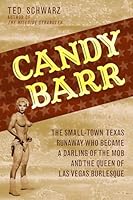
Candy Barr: The Small-Town Texas Runaway Who Became a Darling of the Mob and the Queen of Las Vegas Burlesque by Ted Schwarz (2008).

Candy Barr’s story is not a pretty one. Born Juanita Slusher in rural Texas, she suffered abuse from a young age. As a teenager, she ran away to Dallas, hoping only for a job and the chance to dance. Instead she found herself forced into prostitution and porn. Bright, beautiful, and a talented dancer, she managed not to be crushed by her horrible situation and escaped to become a headlining burlesque dancer. There were a few shining years as a star in Las Vegas and Los Angeles before forces beyond her control again tried to bring her low. She seemed destined never to have a quiet life.

Because Candy/Juanita was alive while the book was being written (she died in 2005), it is full of quotes and memories direct from the source. The author does tend to play the martyr card a little too much. He often portrays the dancer as a naive innocent, caught up in a vast conspiracy to destroy her. The chronology is occasionally hard to follow as the author sometimes jumps ahead or back to provide a better flow to the story.

Her story is one of survival against terrible odds rather than one of glamour and glitter. The descriptions of her dancing will make you wish you were one of the lucky ones in the audience.

Published in: on 16 November 2011 at 11:54 am  Leave a Comment  
Tags: