Dear Constant Reader,
In May (on Toni Elling’s birthday, in fact) I took “The History of Cooch Tent Sideshows”, an on-line class from the Chocolate City Burlesque Academy, taught by founder (and dear friend) Bebe Bardeaux. The class was excellent, as were the others I took, and it reminded me that I never reviewed this book in my collection.
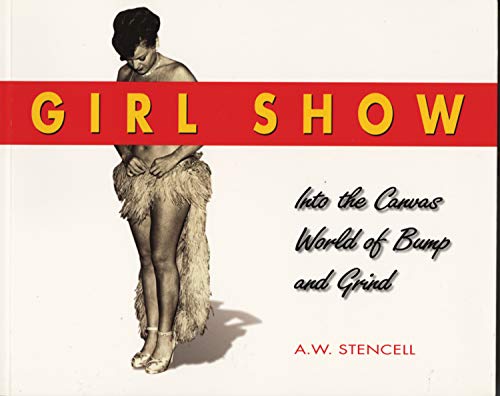 Girl Show: Into the Canvas World of Bump and Grind by A. W. Stencell, 1999.
As long as there have been carnivals, there have been girl shows. This history covers the early days, starting with the 1893 Columbia Exposition through the decline in the 1980s. The many photographs illustrate all aspects of the carnival: girls in action and backstage, advertisements, posters, show fronts, and more. In the back there’s a glossary for some of the carney terms used throughout book, like single-O (a show with only one attraction), blow off (a final act for an additional fee), and bally (a free taste of the show inside).
Some of the biggest names in burlesque worked carnival girl shows: Gypsy Rose Lee, Sally Rand, and Lili St. Cyr, to name a few. Many of the shows were big production revues with relatively elaborate sets and lavish costumes. But there was a lot of grit behind the glitz. There were plenty of cooch shows where the girls worked nude and allowed the patrons to grope them… and more*. And this went on for 10, 12, 14 shows a day.
The book spotlights some of the great names in the carnival biz, some of whom are well known to burlesque fans and some who are more obscure. There’s a fabulous section all about Tirza the Wine Bath Girl and the evolution of her act, with photos. And there’s a mention of that girl who set her tits on fire. Sound like anyone you know?
Besides the girls, the book covers other people who worked these shows. There were talkers, who were not, as you might suppose, hosts or MCs. They stood out front with some of the girls from the show to entice the audience in. A good talker was an entertainer in his** own right as well as persuasive. The best needed only a few girls around him to advertise the show — his patter did most of the work. There’s a brief mention of Leon Claxton’s Harlem in Havana show in this chapter. You can learn more about it in Leslie Cunningham’s book, Brown Skin Showgirls. There were the candy butchers technically sold boxes of candy, but also worked a con to get people to buy by promising fabulous or risqué prizes. They were found in burlesque theatres as well and could have very entertaining pitches. There are also sections on producers, show families, and general carnival life.
It’s a good overview of the traveling show — a fine companion to Carnival Strippers and Brown Skin Showgirls.
*There are photos of this. Just a friendly warning.
**There were female talkers but they were in the minority
 These writings and other creative projects are supported by my 18 Patrons. Thank you so much! To become a Patron, go to my Patreon page. Or you can just tip me if you liked this.




 Oh, The Glamourous Life!