On Rabbits

Dear Constant Reader,


Please vote for The Boston Babydolls once a day every day! Voting closes on Friday!


Last night I was tired and didn’t feel like cooking a feast for one. I decided to have high tea instead of supper. High tea is *not* the fancy meal with the dainty sandwiches and little cakes. That’s “afternoon tea” or (although nobody calls it so) “low tea”, because it’s taken at a low tea table. High tea is in the early evening, usually taken by those too tired and hungry to wait for the late hour of dinner. It’s high, like “It’s high time we had something to eat”. Also, because it’s eaten at a high dining table.

High tea dishes are often hearty, but I tend to think of it as quick comfort food, often on toast.

I made English rabbit. You’re probably familiar with Welsh rabbit. Some call it “rarebit”, but I’m in the “rabbit” camp. It’s the older term, and I’m all about the history. Besides, I think it’s charming and matches up nicely with Scotch Woodcock.*

Welsh rabbit (or rarebit) is toast topped with cheese sauce and then broiled. Sort of like cheese fondue without the dipping part. I don’t care for it because the sauce is made with beer, which is not to my tastes.

English rabbit is made with wine, thusly:

Take 2 slices of bread and toast them very lightly. If they’re slightly stale, you can skip this. Put the bread on a baking tray and pour a little red wine over each slice. Just enough that it softens the bread, but not enough that it gets soggy. Dot the bread with a little butter and toast it again.

In a saucepan, melt together some cheese, a little butter, a spoonful or two of sharp mustard, and some more wine. The proper cheese for this is a sharp cheddar, but we didn’t have much, so I used mostly mozzarella with a little cheddar for flavor. The sauce should be thick.

Pour the sauce over the wine-toast and stick it all under the broiler until the cheese browns & bubbles. Eat with a mug of tea. And a big white cat purring by your side.**
M2
* Another high tea sort of dish — toast, spread with anchovy paste and topped with soft scrambled eggs. It’s something I would never eat, but I can appreciate the whimsy of the name.
** Optional, but optimal.

Published in: on 12 March 2013 at 9:46 am  Leave a Comment  
Tags: ,

Tea Time

Dear Constant Reader,

I’ve mentioned before my great love of tea. Let’s talk a little about that favorite topic today, particularly some on the items one needs to make tea.
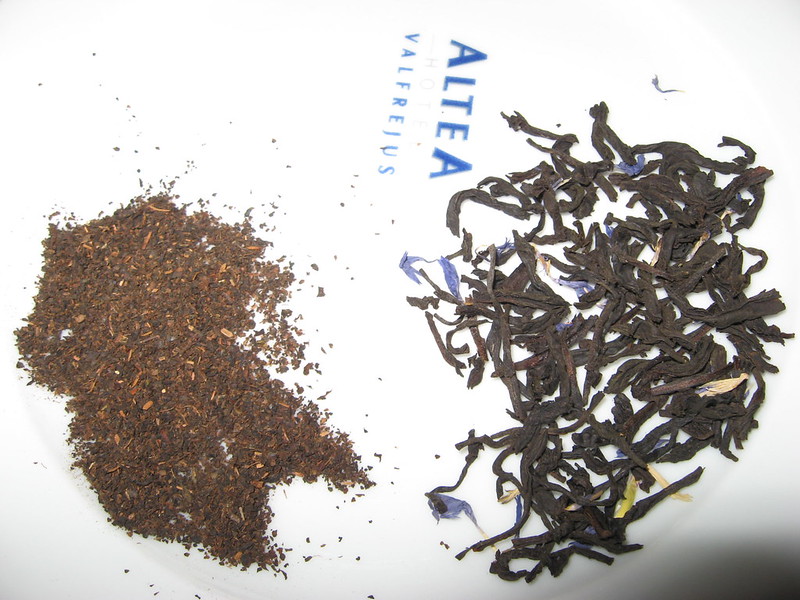
tea-comparision_8402878476_oThese are both tea. On the left is tea from a Lipton tea bag — I don’t drink it, I merely keep it on hand for tea-dying. It’s basically dust. On the left is some good quality loose tea. In this case, Earl Grey from MEM Teas (sponsor of my tea party last year at The Expo). Look at those lovely large leaves. That’s the one I want in my pot.

kettle_8402878666_oThis is a tea kettle. It’s used for boiling water. And the water should be boiling for black tea. There are different guidelines for green teas and for herbal infusions (they’re not tea, but that’s an epistle for another time). This particular kettle whistles, which is nice & cheery.
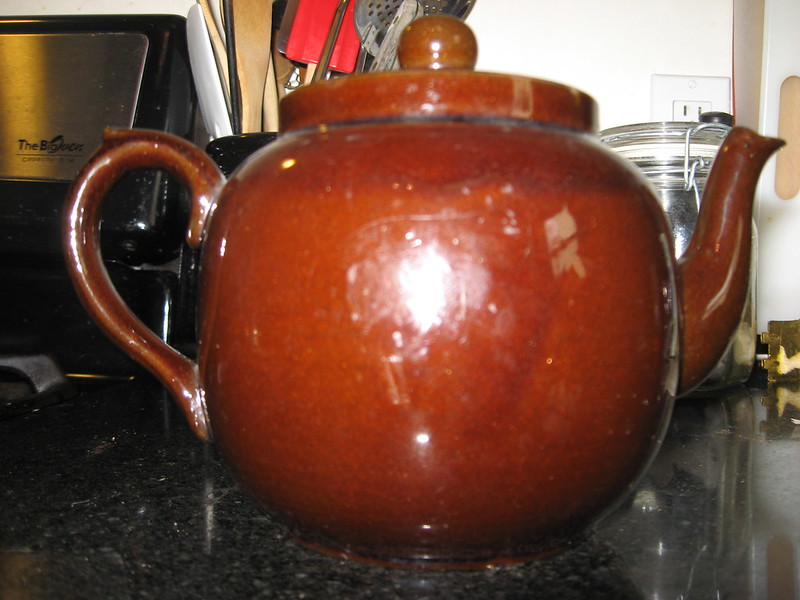
teapot_8402878852_oThis is a tea pot. It’s where the tea is brewed. This pot is ceramic, which I prefer over metal. I do have a silver tea service, but that may be a story for another time. Warm the pot first by swishing a little hot water around it and then pouring it out. Add your tea. Pour the boiling water on top of the tea and let steep for a few minutes (how long depends on the type of tea). Some say to use one spoonful of tea per cup and one for the pot. I find this makes a very strong brew and prefer less tea in my pot.

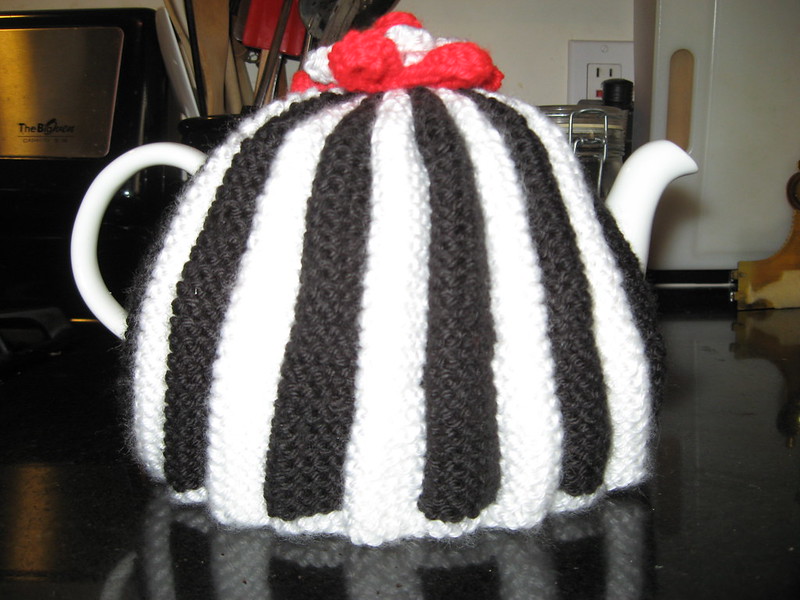
cozyThis is a tea pot wearing a tea cozy to keep the contents warm. My mother knit the cozy for me. Isn’t it charming? This is called a bachelor tea cozy, because one does not have to remove the cozy to pour. Apparently Victorian bachelors were lazy. Other tea cozies look like quilted hats and cover the entire pot. There are some mighty whimsical tea cozies out there too.

These are all ways of getting the tea in the pot, while keeping the leaves out of your teeth. From left to right:
implements_8402879082_o

A tea filter or sachet. It’s like making your own teapot-sized tea bag. Scoop the loose tea into the bag and seal it shut. Easy!

A tea spoon. Excellent for making a single cup. Fill with tea, close and stir into a cup of hot (and by hot, I mean boiling) water. There are also tea balls. Similar to the tea spoon, only it holds more tea. Use a little tea for one cup or a lot for a pot. Mine appears to be camera shy.

A tea strainer. I love this one. Put the tea loose in the pot. Set the strainer across the mouth of a cup and pour through it. It will catch the leaves, leaving you with a clear cup with just enough tea leaves to read later. And the tea left in the pot doesn’t get bitter sitting on the leaves.

Tea can be drunk with sugar and milk (never cream) or lemon. Never milk and lemon or you get a nasty curdled mess in your cup. Personally, I like just lemon, no sugar, which is why I prefer a lighter brew.

I’ll be throwing a tea party again Sunday afternoon at The Expo. We’re still finalizing the details, but it looks like Jacqueline Hyde will be sponsoring the party and providing the tea!

M2

Published in: on 21 January 2013 at 12:43 pm  Leave a Comment  
Tags: ,

Friday Tip

Dear Constant Reader,

Today’s Friday Tip combines two of my favorite things — costuming and tea!

You can use tea to dye white elastic so it is closer to your skin tone.

Obviously you want to use black tea here. Your favorite herbal blend* is not going to have the same effect. Use a couple of cheap tea bags (the sort I’d never use to make anything I was going to drink) to brew up a strong cup and drop in your elastic. Make sure to stir the elastic around so it dyes evenly. Keep an eye on the color of the elastic as it’s soaking and remember that when wet it’s about 2 shades darker than when it dries.

* not actually a tea, but that’s a message for another time.

Published in: on 29 June 2012 at 12:41 pm  Leave a Comment  
Tags: ,

Scones

Dear Constant Reader,

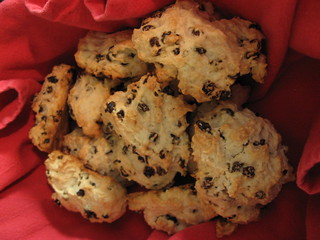
You probably know by now that I’m terribly fond of tea, especially afternoon tea (That’s the one with the dainty sandwiches and tiny cakes. It’s not the same as high tea.). One of my favorite things, besides cucumber sandwiches and petits fours, is scones. My inspiration in all things culinary, the late Marian Walke, made fantastic scones and and I learned a few tips from her; however, this isn’t her recipe. For that you should get her cookbook War Fare. This is the batch I whipped up this morning.

Currant Scones (makes about a dozen)

2 cups flour
1/4 cup sugar
2 teaspoons baking powder
1/2 teaspoon salt
4 Tablespoons (1/2 stick) butter, softened
3/4 cup currants
3/4 cup milk

Preheat the oven to 350. Grease a baking sheet (or grease a foil- or parchment-lined baking sheet for easier clean up).

Mix together flour, sugar, baking powder, and salt.

Cut in the butter until the mixture is sort of crumbly.

Add currants.

Add enough milk to make a soft dough. If it gets too wet, add a little more flour. Don’t beat too vigorously. The ingredients should be just combined.

Now you have a couple of options:
Turn the dough out onto a floured surface, knead just once or twice and pat into a disk about 3/4 inch thick.
Cut with a 2 1/2 inch biscuit cutter (or the rim of a glass).

Or divide the dough in two, pat into disks as above, and cut each one into 6 wedges.

My preferred method is to drop heaping tablespoons onto the baking sheet. It’s faster and requires less clean up.

Bush the scones with milk or a beaten egg yolk thinned with a little water.

Bake for 20-30 minutes until tops and bottoms are lightly browned. Serve warm, or at room temperature, with butter, jam, and/or clotted cream. They’re pretty good plain too.

scones

Notes:
Marian recommended using half all purpose flour and half cake flour.

You can add an egg for additional richness, but you’ll probably need to reduce the milk.

I usually use almond milk, since we don’t tend to have cow’s milk. It makes no difference in the taste.

After brushing the tops with liquid, you can sprinkle them with sanding sugar.

You can prepare the dough in advance, before adding the milk, though everything in a ziptop bag and refrigerate for up to a week or freeze for even longer. Bring the contents up to room temperature before proceeding.

The next Boston Babydolls show is called A (Re)Movable Feast. Expect to see more cooking posts from me in the coming months.

Published in: on 27 May 2012 at 11:18 am  Leave a Comment  
Tags: ,

Expo: Parties

Dear Constant Reader,

The past weekend was The Great Burlesque Exposition of 2012. It’s awfully hard to come back to reality after such an amazing weekend, so I’m going to try to prolong the delight by telling you all about it in little bites.

Todays bite is about parties! Every day of the Expo there’s a special event (besides the shows, classes, and exhibit hall). It’s hard being a glamour girl all day and night — we need a chance to unwind!

Friday night is Naked Girls Reading where we get Naked Girls from all different chapters — this year we represented Boston, New York, and Toronto. You can read all about it at the NGR Boston blog.

Saturday night there was a pool party with fabulous surf music from The Waveriders. Everyone was dancing or swimming or dancing while swimming (hi Babydolls!). We loved the surf version of “Bad Romance”!

Sunday afternoon I hosted a tea party and got to wear my Easter bonnet and frilly apron. Big, big thank you to MEM Teas for providing the delightful Golden Green, Blue Flower Earl Grey, and Decorated Rooibos teas! (it’s really hard for me not to type “tease”)

More about the Expo to come!

Published in: on 10 April 2012 at 11:52 am  Leave a Comment  
Tags: , , ,

Tea

Dear Constant Reader,


Please click and nominate the Boston Babydolls for “Best Burlesque” and Naked Girls Reading for “Best Literary Gang”. Thank you!


It happens, from time to time, that even the most glamourous diva is felled by the common cold. Yes, I’m sick. Fortunately, I have leopard-print pajamas, high-thread count sheets, an advance proof of Victims, and plenty of tea.

It’s tea I actually wanted to write about.

I love tea and the rituals associated with it. And the food served with it. I prefer Darjeeling, with lemon, no sugar. And cucumber sandwiches (I’m a traditionalist that way). Maybe when I’m feeling better, I’ll share my recipe for scones.

The one thing that makes me completely crazy is those who call afternoon tea “high tea” because it sounds grander. Afternoon tea is the dainty meal with finger sandwiches, scones, and petit fours. It’s the one with the fine china and the good silver. Ladies wear hats.

High tea is more substantial meal, served as a substitute for supper. Common high tea dishes are Welsh rabbit, beans on toast, or scrambled eggs. Think simple, comfort foods that go well with a mug of tea.

High tea is so called because it is eaten at a high dining table, not because it is a high occasion. Thusly, afternoon tea can also be called “low tea”, since it’s taken at a low tea table. It’s counterintuitive, but there’s no reason to mix them up once you know.

I will be hosting an afternoon tea at The Great Burlesque Exposition on Sunday at 4. Please join me. I should be feeling better by then…

Published in: on 7 February 2012 at 10:30 am  Leave a Comment  
Tags: