In the Kitchen with Scratch

Dear Constant Reader,


Please vote for The Boston Babydolls every day!


For The Bod of Avon wrap party Scratch promised “some genuine Elizabethan delicacies, a Shakespeare-inspired cocktail (probably hot), and some genuine English beer.”

As it turned out, the beer was a challenge. Our local liquor store has a vast selection of beers from small New England breweries, which is normally a good thing. And plenty of German and Irish imports. And many varieties of hard cider. But Scratch wanted English beer. We finally found some Newcastle brown ale.

The cocktail was inspired by the gossip’s bowl, mentioned in both Romeo and Juliet and A Midsummer’s Night Dream, a hot beverage of ale & cider with roasted apples floating in it. Scratch’s version was soft cider, Shipyard Applehead beer, Jack Daniels (it was supposed to be bourbon, but the Maker’s Mark was mysteriously absent from the liquor cabinet), lemon juice, honey, grated fresh ginger, grated fresh nutmeg, all warmed together. The drink was garnished with dried apple rings (homemade).

The food was a fun project. It had to be Elizabethan, not weird (my offer of pickled herring & fruit pie was struck down), easy to make for a group, and basically finger food. Also, mostly savory because we knew guests were going to bring stuff and a lot of it was going to be dessert.

The first item was hedgehogs. No, not actual hedgehogs, but small meatballs that look like prickly little beasts. The original recipe is in Middle English and involves a pig’s stomach and spit roasting. This is Scratch’s very loose interpretation. As he tends to cook in a loose interpretive style, I don’t have a formal recipe for you.

He started with about 2 pounds total of ground beef, pork, and veal (heavy on the pork) and seasoned it with the Elizabethan quartet of spices (cinnamon, ginger, nutmeg, and clove), emphasis on the ginger, plus black pepper and salt. Then the meat was formed into little footballs and garnished with 2 currants for eyes and slivered almonds for prickles. Then baked until they were done (about half an hour at 350°F).

Ta da!
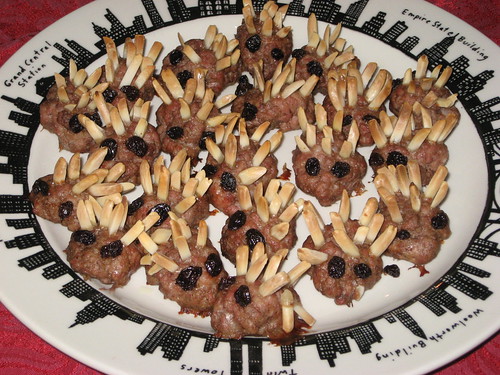
urchins
Aren’t they cute! And tasty too.

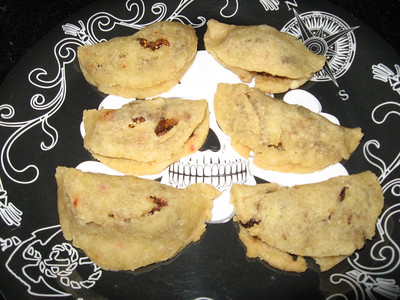
The second dish was Puffes, On the English Fashion, from A New Booke of Cookerie by John Murrell (published 1615).
Take new Milke curds, presse out the Whay cleane, take the yolkes of three Egges, and the white of one, fine Wheat floure, and mingle amongst your Curdes. Season it with Nutmeg, Sugar, and Rosewater, mingle all together. Butter a fayre white paper, lay a spooneful at once upon it, set them into a warme Oven, not over hot, when you see them rise as high as a halfe peny loafe, then take Rosewater, and Butter, and indale them over: scrape on Sugar, and set them in the Oven again, until they be dryed at the tops like yce. Then take them out, and serve them upon a Plate, either at Dinner or supper.

2 pounds “country style” cottage cheese, allowed to drain for several hours
2 egg whites
6 egg yolks
1 cup flour

These were all beaten together. Scratch wanted a savory dish, so instead of nutmeg, sugar, and rosewater, he seasoned them with chives, dry mustard, salt, pepper. They were dropped by spoonfuls on greased foil on a baking sheet and baked for about 15 minutes at 350°F. Because they were savory, he didn’t bother with the sweet glaze in the original.

puffes
They really puffed as soon as they came out of the oven, but by the time I snapped this, they had fallen.

Besides the historic treats we also provided crudites & dip, goat’s milk cheddar & crackers, hummus, salt & vinegar crisps (okay, really potato chips). I know guests brought stuff but I only remember Alissa’s corset cookies, Evie’s pigs in blankets, Red’s quince goo deluxe (another story for another time), and Devora’s enormous avocado.

M2

Published in: on 4 March 2013 at 10:17 am  Leave a Comment  
Tags: , , ,

In the Kitchen with Mina

Dear Constant Reader,


Please vote for The Boston Babydolls every day!


To celebrate a successful run of The Bod of Avon, we’re having a wrap party at Stately Babydoll Manor. Scratch has promised authentic Elizabethan delicacies for the guests. This is not as crazy as it sounds.

You know from my writings here that I am a bit of a culinary historian with an interest in mid-century cuisine. But I also do research into Renaissance cooking, mostly Elizabethan England, and Scratch dabbles a bit too.

Here’s one of my favorite Elizabethan snacks. The recipe was originally published in The Good Huswifes Jewell by Thomas Dawson in 1597. And looked like this:

To make Peascods1 in Lent2
Take Figs, Raisons, and a few Dates, and beate them very fine, and season it with Cloves, Mace, Cinamon and Ginger, and for your paste seeth faire water and oyle in a dish uppon coales, put therein saffron and salt and a little flower, fashion them then like peasecods, and when ye will serve them, frye them in Oyle in a frying panne, but let the Oyle bee verie hotte, and the fire soft for burning of them

Odd as it may look, it’s more straight-forward than Medieval recipes. For one thing, it’s not in Middle English. Here’s my version:

Filling:peascod ingredients
4 dates
5 figs
1/4 c. raisins
1/2 tsp. ground cinnamon
1/4 tsp. ground ginger
1/4 tsp. ground mace3
pinch ground clove

Dough:
1 c. water
1/3 c. oil
1 c. flour4
1/4 tsp. salt
pinch saffron

Oil for frying

Grind together salt and saffron5. Simmer together water & oil. When boiling, remove from heat and beat in flour, salt & saffron6. Keep beating. Really. It will turn into a soft dough. Let the dough cool.

Chop fruit finely and mix in the spices.

Roll out the dough to about 1/4 inch thick. Cut into 3″ diameter rounds.7

peascods in progressPlace a spoonful of fruit filling on half of a round of dough, fold the other half over & pinch shut. They’re supposed to look like peapods, so you can curve them a little into shape. The dough might crack a bit, but that’s okay.

You have two options for cooking. You can fry them in oil, like the recipe says. Make sure the oil is quite hot because the dough is like a little sponge. Serve these hot. Or you can (less authentic, but healthier) bake them on a parchment-lined baking sheet at 350°F for 25-30 minutes until golden. These will keep longer than the fried version.

peascods

Makes about a baker’s dozen.

M2

1 A “Peascod” is a peapod. A “codpiece” is something else entirely. Even if they look similar.
2 In the 16th century Lent meant no meat, no dairy, no eggs — basically vegan, plus fish. There’s also a “flesh day” version of this recipe with meat, butter, and eggs.
3Mace isn’t that common a spice these days. If you don’t have any in your spice cabinet, you could substitute a little nutmeg. Cinnamon, ginger, nutmeg, and clove are the classic quartet of Elizabethan spice. There’s even a little song.
4I use a mixture of flours, based on the researches of Marian Walke, to approximate the flour of the time: 3/4 c. white flour, 2 1/2 Tbs. cake flour, 1 Tbs. wheat flour, 1 1/2 tsp. rye flour. You don’t have to be this compulsive.
5 I do this with a mortar & pestle. The salt helps pulverize the saffron threads for even distribution. I did this hastily (because I was trying to cook & take photos) and ended up with little orange splotches in my dough instead of a lovely golden tint.
6 This is essentially choux pastry — like cream puffs or eclairs — without the butter & eggs.
7 A biscuit cutter works great for this.

Published in: on 26 February 2013 at 11:57 am  Leave a Comment  
Tags: , , ,

Fat Tuesday

Dear Constant Reader,

Here’s your daily reminder to nominate The Boston Babydolls for Best Burlesque. You can vote once per day per email/IP address. Thank you.

Happy Mardi Gras! Or Shrove Tuesday! Or Maslenitsa! Or just plain Tuesday! There might be pancakes (or beignets or blini) at stately Babydoll Manor tonight. Any excuse to celebrate!

Because I’m feeling festive, here’s Scratch’s recipe for blini.

1/3 c. buckwheat flour
2/3 c. all-purpose flour
1/2 tps. baking powder
3/4 tsp. salt
3/4 c. plus 2 Tbsp. milk
1 egg
1 stick unsalted butter, clarified*

Combine flours, baking powder, and salt in one bowl. In another bowl, whisk milk, egg, and 1 Tablespoon of butter. Whisk wet ingredients into dry ingredients.

Heat 1 Tablespoon of the butter in a medium pan and when it’s sizzling, pour the batter into the pan by Tablespoons to make little pancakes. Cook over medium-low heat until the batter starts to bubble, about 2 minutes. Flip and cook for another minute, until brown. Repeat with remaining batter, adding more butter as necessary.

Serve with sour cream & caviar.

M2

P.S. Scratch reminds me that Maslenitsa isn’t until next month (forgot about the Orthodox calendar) and that these are quick blini; proper ones are made with yeast.

* To clarify butter, gently melt the butter. Strain the melted butter through cheesecloth and toss the white solids left behind in the cloth. The clear golden liquid is clarified butter. It heats to a higher temperature and keeps longer than regular butter.

Published in: on 12 February 2013 at 9:26 am  Leave a Comment  
Tags: ,

Tea Time

Dear Constant Reader,

I’ve mentioned before my great love of tea. Let’s talk a little about that favorite topic today, particularly some on the items one needs to make tea.
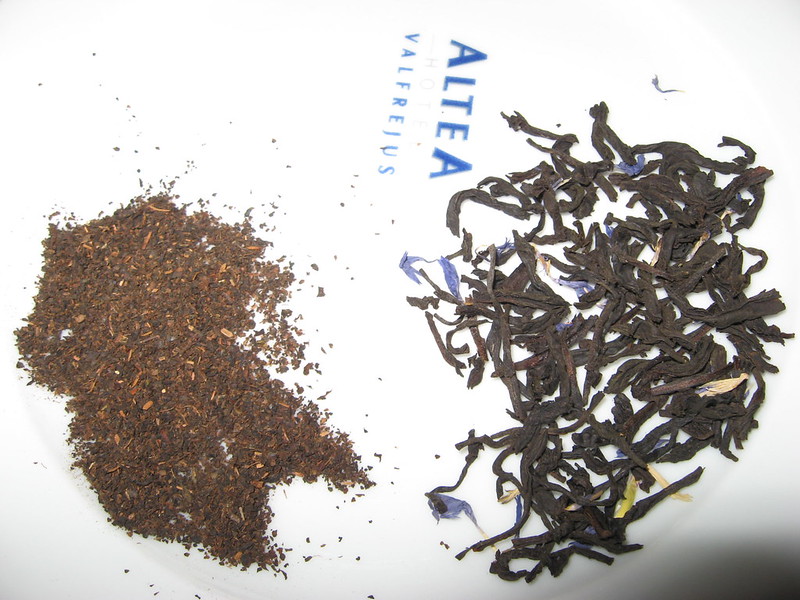
tea-comparision_8402878476_oThese are both tea. On the left is tea from a Lipton tea bag — I don’t drink it, I merely keep it on hand for tea-dying. It’s basically dust. On the left is some good quality loose tea. In this case, Earl Grey from MEM Teas (sponsor of my tea party last year at The Expo). Look at those lovely large leaves. That’s the one I want in my pot.

kettle_8402878666_oThis is a tea kettle. It’s used for boiling water. And the water should be boiling for black tea. There are different guidelines for green teas and for herbal infusions (they’re not tea, but that’s an epistle for another time). This particular kettle whistles, which is nice & cheery.
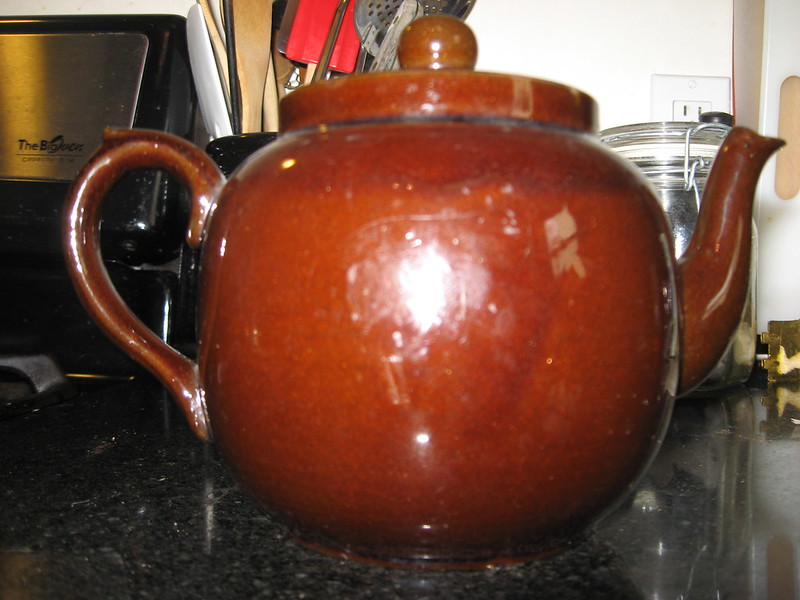
teapot_8402878852_oThis is a tea pot. It’s where the tea is brewed. This pot is ceramic, which I prefer over metal. I do have a silver tea service, but that may be a story for another time. Warm the pot first by swishing a little hot water around it and then pouring it out. Add your tea. Pour the boiling water on top of the tea and let steep for a few minutes (how long depends on the type of tea). Some say to use one spoonful of tea per cup and one for the pot. I find this makes a very strong brew and prefer less tea in my pot.

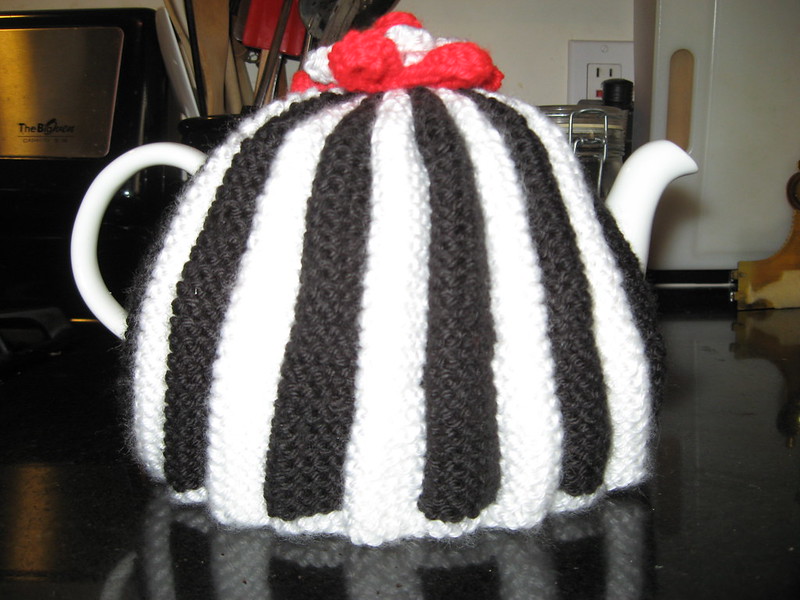
cozyThis is a tea pot wearing a tea cozy to keep the contents warm. My mother knit the cozy for me. Isn’t it charming? This is called a bachelor tea cozy, because one does not have to remove the cozy to pour. Apparently Victorian bachelors were lazy. Other tea cozies look like quilted hats and cover the entire pot. There are some mighty whimsical tea cozies out there too.

These are all ways of getting the tea in the pot, while keeping the leaves out of your teeth. From left to right:
implements_8402879082_o

A tea filter or sachet. It’s like making your own teapot-sized tea bag. Scoop the loose tea into the bag and seal it shut. Easy!

A tea spoon. Excellent for making a single cup. Fill with tea, close and stir into a cup of hot (and by hot, I mean boiling) water. There are also tea balls. Similar to the tea spoon, only it holds more tea. Use a little tea for one cup or a lot for a pot. Mine appears to be camera shy.

A tea strainer. I love this one. Put the tea loose in the pot. Set the strainer across the mouth of a cup and pour through it. It will catch the leaves, leaving you with a clear cup with just enough tea leaves to read later. And the tea left in the pot doesn’t get bitter sitting on the leaves.

Tea can be drunk with sugar and milk (never cream) or lemon. Never milk and lemon or you get a nasty curdled mess in your cup. Personally, I like just lemon, no sugar, which is why I prefer a lighter brew.

I’ll be throwing a tea party again Sunday afternoon at The Expo. We’re still finalizing the details, but it looks like Jacqueline Hyde will be sponsoring the party and providing the tea!

M2

Published in: on 21 January 2013 at 12:43 pm  Leave a Comment  
Tags: ,

Happy New Year!

Dear Constant Reader,

I hope you had a lovely New Year’s Eve celebration and 2013 is a wonderful year for you!

At Stately Babydoll Manor, Scratch made a sumptuous feast, as is his wont. [EDIT: Scratch points out that I neglected to mention the hors d’oeuvres of artichoke tapenade on rounds of Persian cucumber and broiled shrimp wrapped in bacon. Albert, the Manor cat, received a single plain boiled shrimp, but he turned up his nose in favor of cat food. He’s weird.] The main course included a pork roast braised in cider with pears and quinoa mixed with sweet spiced wild rice. But the highlight was a ratatouille galette.

Scratch took slices of zucchini, tomato, and onion, and alternated them in concentric rings in a cast iron frying pan that had been lightly coated with basil-infused olive oil. He sprinkled more onions on top and seasoned it (I know dill was involved and seasoned salt. but I’m unsure of the details). It baked for about an hour and everything caramelized. I wish I’d taken a picture, but your Faithful Correspondent is not in the habit of photographing her dinner. That may change this year. You’ll just have to take my word for it that the dish was beautiful and delicious.

Also, beautiful and delicious (and similarly undocumented for posterity) was the dessert I made: blackberry clafouti1. Clafouti is a sort of fruity custardy baked pancake. And it’s so easy to make —  just put the fruit in a pie pan, pour the batter over it, and bake until it puffs up and turns brown around the edges. In early July I make it with sour cherries from the Manor’s orchards. As a bonus, the recipe I use is quite light & healthy, despite it being for a French dessert.

At midnght there was peach prosecco, as there should be.

New Year’s Day was spent working on my new costume for The Bod of Avon, which you should all come see, either in previews or the real thing. No photos of the costume, although I desperately want to show you — the fabric is just stunning. Come to the show and see it!

And how did you spend the holiday?

M2
1Technically, clafouti is made with cherries and if any other kind of fruit is used, it’s called flaugnarde, but I’m not that much of a stickler for accuracy.

Published in: on 2 January 2013 at 11:07 am  Comments (1)  
Tags: , ,

In the Kitchen with Mina

Dear Constant Reader,

I did a little cooking yesterday, and, among other items, made a classic fruit salad. This one, although popular in the 1950’s, has its origins in the 1920’s. The salad is quite whimsical in its design, which was typical of ladies’ “dainty” luncheon dishes.

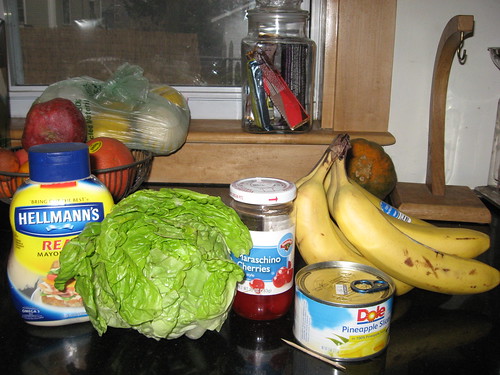
Candle stick salad ingredientsTake your ingredients: lettuce leaves, canned pineapple rings, bananas, maraschino cherries, and mayonnaise. There was a bit of a tropical fruit craze in the ’20’s, probably promoted by Dole, which was the main importer of pineapple (canned, of course) and bananas from Hawaii to the mainland. Maraschino cherries (the neon red kind) are also a product of the 1920’s.

The assembly of this salad is key. You need to properly present all the ingredients or the impact is lost. A toothpick or two can help with the architecture. Don’t forget that this was commonly served at ladies’ luncheons, so you want to make sure the shape is instantly recognizable.

Tada!

Candlestick salad!

Isn’t that clever! A pineapple ring candle holder, a banana candle, a cherry flame, and mayonnaise wax!

Why? What did you think it was?

M2

Published in: on 17 December 2012 at 10:57 am  Leave a Comment  
Tags: , , , , ,

A Bit of Sparkle (of a different sort)

Dear Constant Reader,

I’ve had bubbly on the brain lately. Maybe it’s the upcoming holidays. Today I’d like to share with you some of my favorite sparkling cocktails.

Remember, you don’t need top-shelf bubbly for these, since you’ll be adding mixers. And when I say “bubbly”, I mean sparkling wine, not restricted to Champagne (which is a very specific type, made in the Champagne region of France). There are plenty of very good sparkling wines from all over the world.

The classic sparkling brunch cocktail is, of course, the Mimosa. I’ve been to a number of restaurants where the idea of a Mimosa is a glass of bubbly with a splash of orange juice for color. A proper Mimosa is equal parts of champagne and orange juice. There is also the Buck’s Fizz, which is two parts orange juice to one part bubbly and maybe a touch of grenadine.

I’m very found of the Bellini, which is sadly hard to find made properly. A true Bellini is made with 1 part white peach puree and 2 parts Prosecco. A splash of cherry or raspberry juice is optional, but not unwelcome.

One place where I diverge from tradition is the Kir Royale, traditionally made with 9 parts Champagne and 1 part crème de cassis. I like to substitute crème de violette.

Speaking of floral liqueurs, I adore St. Germain, the elder flower liqueur. I know it’s oh-so-trendy today, but I tried it not long after it first became available and I’ve been smitten ever since. I was introduced to it at The Last Hurrah at The Parker House where they served a French 77 (a play on the French 75 — gin, lemon juice, simple syrup, and Champagne), made with St. Germain, lemon syrup, and bubbly.

My friend Sarah recommends The Gilded Lily: 1 oz St. Germain, 3 oz prosecco, 2 fresh ripe strawberries, 1 small pinch fresh ground grains of paradise, which I have to agree is fantastic.

More often than not I just have a simple St. Germain cocktail — St. Germain and equal parts of sparkling wine and sparkling water, over ice, with a lemon twist. So light and refreshing, it’s perfect for a post-show tipple.

What’s your favorite sparkler?

M2

Published in: on 6 December 2012 at 11:13 am  Leave a Comment  
Tags: ,

Scones

Dear Constant Reader,

You probably know by now that I’m terribly fond of tea, especially afternoon tea (That’s the one with the dainty sandwiches and tiny cakes. It’s not the same as high tea.). One of my favorite things, besides cucumber sandwiches and petits fours, is scones. My inspiration in all things culinary, the late Marian Walke, made fantastic scones and and I learned a few tips from her; however, this isn’t her recipe. For that you should get her cookbook War Fare. This is the batch I whipped up this morning.

Currant Scones (makes about a dozen)

2 cups flour
1/4 cup sugar
2 teaspoons baking powder
1/2 teaspoon salt
4 Tablespoons (1/2 stick) butter, softened
3/4 cup currants
3/4 cup milk

Preheat the oven to 350. Grease a baking sheet (or grease a foil- or parchment-lined baking sheet for easier clean up).

Mix together flour, sugar, baking powder, and salt.

Cut in the butter until the mixture is sort of crumbly.

Add currants.

Add enough milk to make a soft dough. If it gets too wet, add a little more flour. Don’t beat too vigorously. The ingredients should be just combined.

Now you have a couple of options:
Turn the dough out onto a floured surface, knead just once or twice and pat into a disk about 3/4 inch thick.
Cut with a 2 1/2 inch biscuit cutter (or the rim of a glass).

Or divide the dough in two, pat into disks as above, and cut each one into 6 wedges.

My preferred method is to drop heaping tablespoons onto the baking sheet. It’s faster and requires less clean up.

Bush the scones with milk or a beaten egg yolk thinned with a little water.

Bake for 20-30 minutes until tops and bottoms are lightly browned. Serve warm, or at room temperature, with butter, jam, and/or clotted cream. They’re pretty good plain too.

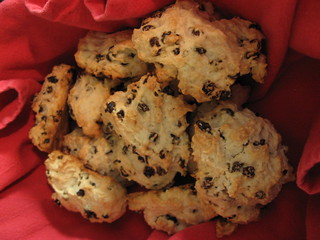
scones

Notes:
Marian recommended using half all purpose flour and half cake flour.

You can add an egg for additional richness, but you’ll probably need to reduce the milk.

I usually use almond milk, since we don’t tend to have cow’s milk. It makes no difference in the taste.

After brushing the tops with liquid, you can sprinkle them with sanding sugar.

You can prepare the dough in advance, before adding the milk, though everything in a ziptop bag and refrigerate for up to a week or freeze for even longer. Bring the contents up to room temperature before proceeding.

The next Boston Babydolls show is called A (Re)Movable Feast. Expect to see more cooking posts from me in the coming months.

Published in: on 27 May 2012 at 11:18 am  Leave a Comment  
Tags: ,

Happy Mardi Gras

Dear Constant Reader,


Vote for the Boston Babydolls!


It’s Mardi Gras, or Carnival, or Shrove Tuesday, as you like. Enjoy the last day before those 40 days of penitence and abstenance until… The Great Burlesque Expo! (or Easter, if you’re like that)

You may be wondering how the Boston Babydolls celebrate Mardi Gras. Or not, but I’m going to tell you anyway.

On Saturday, we performed at the 19th Annual Mardi Gras Ball, hosted by Shaun Wolf Wortis. We love this event. It’s such a treat getting to perform to live jazz & blues in front of hundreds of screaming revelers.

Evie starting things off with a smokin’ striptease to “Purple Wail”. On stage Evie is often sweet, goofy, adorable, or mysterious, but that night she was sexy as all get out.

She was followed by Betty Blaize showing off her bellydance skills to “Caravan”. As sometimes happens with a live band, things got a little interesting, but Betty is a great improvisation dancer and I don’t think the audience had any idea things had not gone completely according to plan.

Brigitte reprised her tap dance from Unlucky in Love to “Let’s Misbehave”, as sung by Alissa Coates. I’m afraid the people in the back of the club were unable to see her fancy footwork, but someone put a microphone down on the stage, so the tapping could be heard.

I closed out the set with a fan dance to “Harlem Nocturne”, one of my favorites. As always, the drummer is the happiest guy in the band, since he sees what is concealed from the rest of you.

The next morning (not too early) we had a cast party for Unlucky in Love, continuing the Mardi Gras theme. Scratch made big batches of jambalaya and red beans & rice and Devora brought homemade pralines. I made beignet dough (I will admit, it was Cafe du Monde mix, but only because I’ve been sick lately & tire easily and Scratch wouldn’t hear of me putting in the extra work to make them from, well, scratch). Then Bobby the Fry Guy cooked up the beignets to crispy perfection with the Fry Gal on powdered sugar duty. And of course a soundtrack of jazz to accompany it all.

Because I am a traditionalist, I believe there will be pancakes tonight.

And how do you celebrate the day?

Published in: on 21 February 2012 at 10:50 am  Leave a Comment  
Tags:

Tea

Dear Constant Reader,


Please click and nominate the Boston Babydolls for “Best Burlesque” and Naked Girls Reading for “Best Literary Gang”. Thank you!


It happens, from time to time, that even the most glamourous diva is felled by the common cold. Yes, I’m sick. Fortunately, I have leopard-print pajamas, high-thread count sheets, an advance proof of Victims, and plenty of tea.

It’s tea I actually wanted to write about.

I love tea and the rituals associated with it. And the food served with it. I prefer Darjeeling, with lemon, no sugar. And cucumber sandwiches (I’m a traditionalist that way). Maybe when I’m feeling better, I’ll share my recipe for scones.

The one thing that makes me completely crazy is those who call afternoon tea “high tea” because it sounds grander. Afternoon tea is the dainty meal with finger sandwiches, scones, and petit fours. It’s the one with the fine china and the good silver. Ladies wear hats.

High tea is more substantial meal, served as a substitute for supper. Common high tea dishes are Welsh rabbit, beans on toast, or scrambled eggs. Think simple, comfort foods that go well with a mug of tea.

High tea is so called because it is eaten at a high dining table, not because it is a high occasion. Thusly, afternoon tea can also be called “low tea”, since it’s taken at a low tea table. It’s counterintuitive, but there’s no reason to mix them up once you know.

I will be hosting an afternoon tea at The Great Burlesque Exposition on Sunday at 4. Please join me. I should be feeling better by then…

Published in: on 7 February 2012 at 10:30 am  Leave a Comment  
Tags: